
Build Your Enterprise Product Design Team for Startups in 4 Steps
Learn to build an effective enterprise product design team for startups in four essential steps.


Introduction
Building a successful enterprise product design team is crucial for startups that want to innovate and thrive in competitive markets. This guide outlines four essential steps that streamline the design process and foster a collaborative, dynamic team environment. But how can startups attract the right talent and cultivate a culture of continuous improvement? Exploring these strategies can lead to creative breakthroughs and drive sustainable growth.
Define Core Design Principles
To define core design principles for your startup's product design team, follow these essential steps:
-
Identify Key Values: Gather your team to discuss the values that are most significant to your creative philosophy. Focus on aspects like user-centricity, simplicity, and innovation. What principles resonate with your vision?
-
Draft Principles: With your key values in mind, draft a set of guiding principles for your design decisions. Consider statements like 'Design for the user first' or 'Simplicity is key.' These principles will serve as your North Star.
-
Collaborate and Iterate: Share your draft with the team and encourage constructive feedback. This collaborative approach not only fosters buy-in but can also lead to more refined principles that truly reflect your collective vision.
-
Document and Share: Once finalized, clearly document these principles and distribute them to all team members. Ensure they are readily available for reference during planning discussions and decision-making processes. This transparency is crucial for alignment.
-
Review Regularly: As your startup evolves, revisit these principles to ensure they remain relevant and effective. Are they still aligned with your business goals and user needs? Adjust them as necessary to reflect any changes in your landscape.

Establish Team Structure and Roles
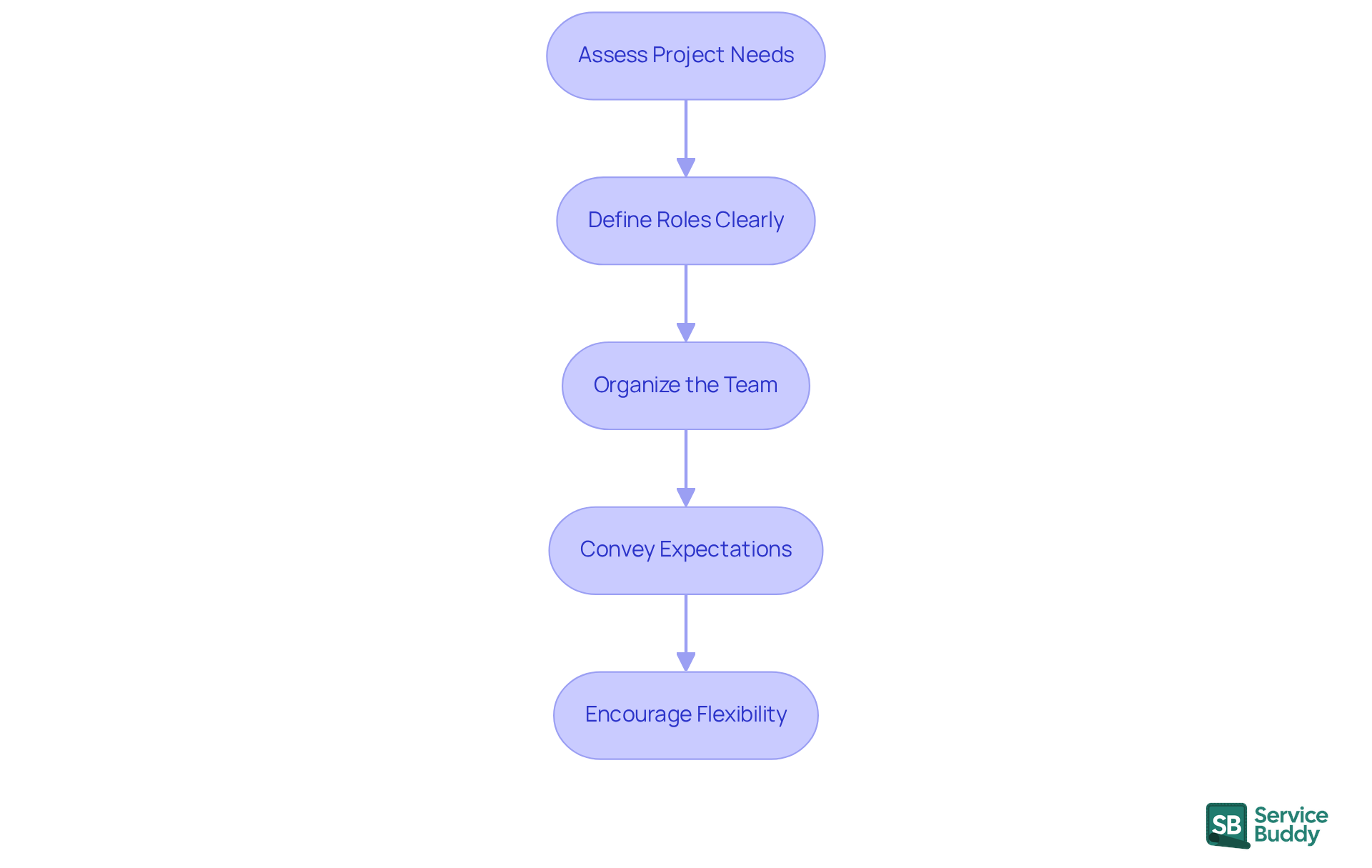
To establish an effective team structure and define roles within your design team, follow these essential steps:
-
Assess Project Needs: Start by evaluating the specific requirements of your projects. Identify necessary roles such as UX/UI designers, product managers, and researchers. Each of these positions plays a crucial part in the design process, ensuring that all aspects are covered.
-
Define Roles Clearly: Create detailed job descriptions for each position. Outline responsibilities, necessary skills, and contributions to the group's objectives. This clarity helps prevent overlaps and ensures accountability. For instance, the SKP Federation's approach reduced founder coordination time from approximately 40% to 10%, showcasing the efficiency gained through clear role definitions.
-
Organize the Team: Choose a structure that aligns with your startup's size and culture. Smaller groups may benefit from a flat structure, promoting agility, while larger groups might require a more hierarchical approach to manage complexity effectively. Consider a hybrid group structure that merges generalists and specialists to leverage diverse skills.
-
Convey Expectations: Ensure all participants understand their roles and how they fit into the larger group dynamic. Regular check-ins and updates can reinforce this understanding, fostering collaboration and alignment. The successful launch of InnovateCo, completed in just 3.5 months with zero compliance errors, exemplifies the benefits of clear communication and defined roles.
-
Encourage Flexibility: In a startup environment, roles can evolve as projects progress. Promote adaptability among team members, encouraging them to embrace new responsibilities and collaborate across functions as needed. This flexibility can enhance innovation and responsiveness to changing project demands.
Recruit and Retain Design Talent
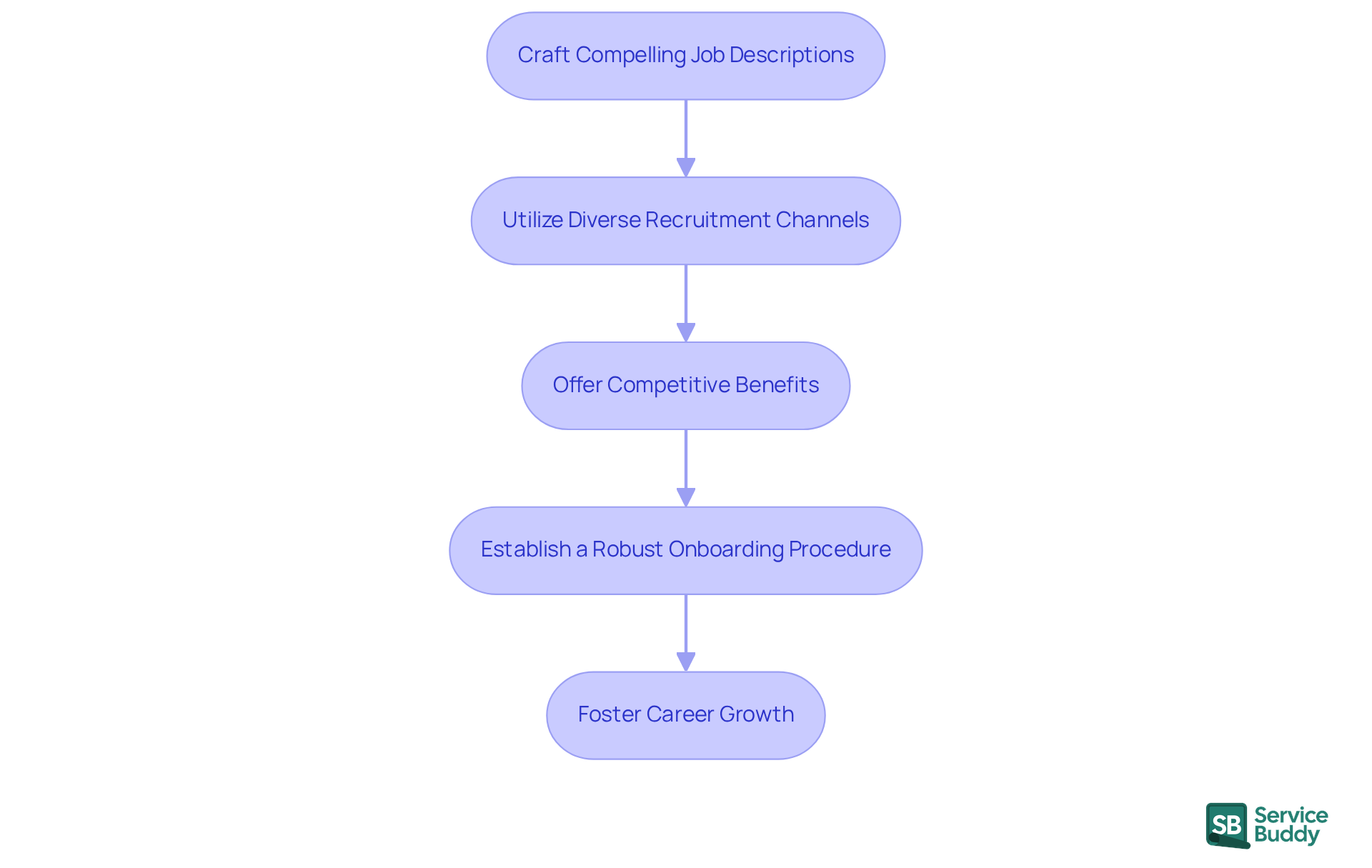
To effectively recruit and retain design talent for your startup, consider these essential steps:
-
Craft Compelling Job Descriptions: Start by writing clear and engaging job descriptions. Highlight what makes your startup unique and the significant impact potential hires can have on your mission.
-
Utilize Diverse Recruitment Channels: Don’t limit your search. Leverage various platforms like LinkedIn, design communities, and industry events to reach a broader audience of potential candidates.
-
Offer Competitive Benefits: While you may not always compete on salary, offering flexible work arrangements, professional development opportunities, and a positive work culture can significantly attract top talent.
-
Establish a Robust Onboarding Procedure: Ensure new hires feel welcomed and integrated into the team. A structured onboarding process that includes mentorship and training is crucial for their success.
-
Foster Career Growth: Provide opportunities for skill enhancement and career progression. Keep your team engaged and motivated by regularly discussing their career aspirations and offering guidance to help them grow.
By implementing these strategies, you can create a compelling environment that not only attracts but also retains top design talent for your enterprise product design team for startups, driving your startup toward success.
Cultivate a Feedback Culture
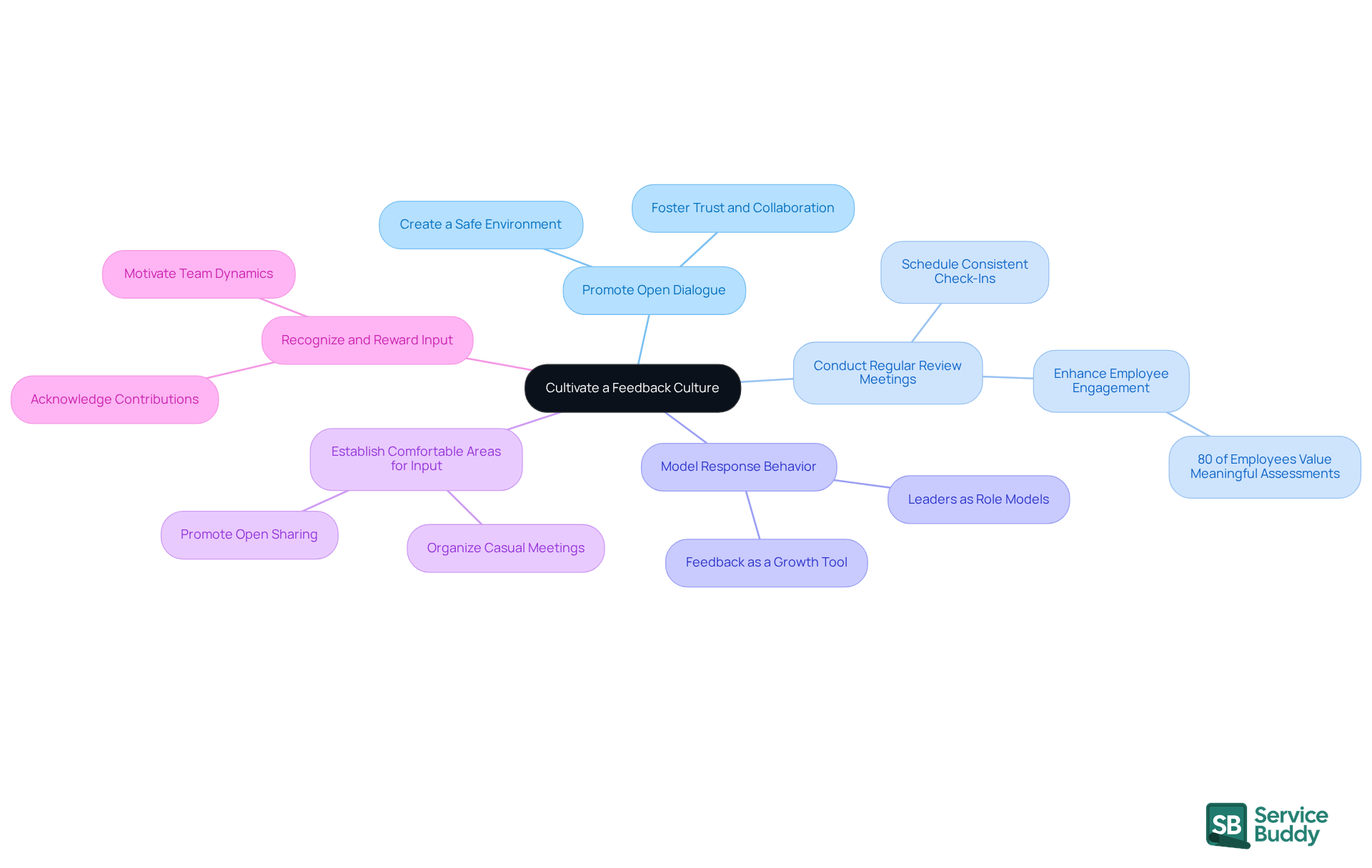
To cultivate a robust feedback culture within your design team, consider implementing these effective strategies:
-
Promote Open Dialogue: Create an environment where team members feel secure expressing their thoughts and ideas without fear of criticism. This openness fosters trust and collaboration, which are essential for innovation.
-
Conduct Regular Review Meetings: Schedule consistent check-ins and review sessions. These gatherings allow team members to discuss their work and receive constructive criticism. Regular evaluations significantly enhance employee engagement and performance; in fact, 80% of employees report that meaningful assessments strengthen their connection to their work.
-
Model Response Behavior: Leaders should exemplify effective evaluation practices, showing that feedback is a tool for growth rather than a punitive measure. This approach encourages individuals to embrace feedback as a vital part of their development.
-
Establish Comfortable Areas for Input: Organize casual meetings or workshops where team members can share their thoughts in a relaxed setting. Such environments promote openness and collaboration, making it easier for individuals to voice their ideas.
-
Recognize and Reward Input: Acknowledge team members who actively participate in giving and receiving feedback. Celebrating these contributions reinforces the importance of a feedback culture and motivates others to engage, ultimately enhancing team dynamics and performance.
As industry leaders emphasize, fostering a culture of open communication is crucial for team success. A significant percentage of employees believe that effective feedback enhances their performance, underscoring the need for organizations to prioritize these practices.
Conclusion
Building a successful enterprise product design team for startups requires a structured approach that defines core design principles, establishes clear team roles, recruits and retains top talent, and fosters a culture of feedback. Each of these elements is crucial for ensuring that the design team aligns with the startup's vision and thrives in a dynamic environment.
Key steps include:
- Identifying and documenting core design principles that guide decision-making.
- Creating a structured team environment with clear roles to enhance accountability.
- Implementing effective recruitment strategies to attract and retain skilled designers.
- Cultivating a feedback culture that promotes open communication, enabling team members to grow and innovate collaboratively.
These practices collectively contribute to building a resilient and effective design team that can adapt to the evolving needs of the startup.
The significance of a well-rounded product design team cannot be overstated. By prioritizing these strategies, startups can enhance their design capabilities and foster an environment that encourages creativity and continuous improvement. Embracing these principles leads to stronger products and a more engaged team, setting the foundation for long-term success in a competitive landscape.
Frequently Asked Questions
What are the steps to define core design principles for a startup's product design team?
The steps include identifying key values, drafting principles, collaborating and iterating, documenting and sharing, and reviewing regularly.
How can a team identify key values for their design principles?
The team should gather to discuss the values that are significant to their creative philosophy, focusing on aspects like user-centricity, simplicity, and innovation.
What should be included in the drafted principles?
The drafted principles should include guiding statements that reflect the team's values, such as 'Design for the user first' or 'Simplicity is key.'
Why is collaboration important when drafting design principles?
Collaboration fosters buy-in from the team and can lead to more refined principles that accurately reflect the collective vision.
How should the finalized design principles be handled?
Once finalized, the principles should be clearly documented and shared with all team members, ensuring they are readily available for reference during planning and decision-making.
Why is it important to review design principles regularly?
Regular reviews ensure that the principles remain relevant and effective, aligning with evolving business goals and user needs, and allowing for necessary adjustments.
List of Sources
- Define Core Design Principles
- 40+ Product Design Statistics: UX Metrics, ROI Benchmarks & Data for 2026 (https://designrush.com/agency/product-design/trends/product-design-statistics)
- 28 essential web design statistics for 2025: Key trends and insights (https://hostinger.com/tutorials/web-design-statistics)
- The Ultimate Guide to Branding Principles for SaaS Startups | Neue World Insights (https://neue.world/insights/the-ultimate-guide-to-branding-principles-for-saas-startups)
- Product Design Trends 2025 | Transcenda (https://transcenda.com/insights/game-changing-product-design-whats-hot-in-2025)
- 23 Design Quotes to Inspire and Guide You - Remon design (https://remon.design/23-design-quotes-to-inspire-and-guide-you)
- Establish Team Structure and Roles
- Case Study: Complete Startup Launch with SKP Business Federation Services - Smart Stack Accounting (https://sstackaccounting.com/case_studies/case-study-complete-startup-launch-with-skp-business-federation-services)
- Software Development Team Structure - 12 Dos and Don'ts (https://softkraft.co/software-development-team-structure)
- Typical Design Team Structures and Alignment (https://nngroup.com/articles/design-team-statistics)
- The optimal team structure in digital product design - Each role explained (https://martinsandstrom.com/optimal-team-structure-digital-product-design)
- Recruit and Retain Design Talent
- 65+ Recruitment Statistics HR Teams Must Know in 2025 (https://recruiterslineup.com/top-recruitment-statistics-hr-teams-must-know)
- Recruiter Productivity | 2025 Talent Trends Report | Ashby (https://ashbyhq.com/talent-trends-report/reports/2023-recruiter-productivity-trends-report)
- 19 Motivational Recruitment Quotes for Recruiters (https://recruiterflow.com/blog/recruitment-quotes)
- 9 Highly Inspirational Recruiting Quotes For 2026 | Vouch (https://vouchfor.com/blog/inspirational-recruiting-quotes)
- 100+ Recruitment Statistics Every HR Should Know in 2025 - SSR (https://selectsoftwarereviews.com/blog/recruiting-statistics)
- Cultivate a Feedback Culture
- 6 quotes about company culture (https://predictiveindex.com/blog/company-culture-quotes)
- 63 Employee Feedback Statistics in 2025 | Peaceful Leaders Academy (https://peacefulleadersacademy.com/blog/employee-feedback-statistics)
- Employee Feedback Statistics: 25+Facts & Trends for Better Engagement (https://thrivesparrow.com/blog/employee-feedback-statistics)
- 11 Proven Steps to Build a Thriving Feedback Culture (https://teamflect.com/blog/employee-engagement/how-to-create-a-feedback-culture)
- 15 Company Culture Quotes Every Leader Should Know (https://trinet.com/insights/company-culture-quotes)
Related Blog Posts

.svg)
See Service Buddy in action with a live demo
Everything you need to run your flooring business, Service Buddy is your all-in-one management platform.