
5 Best Practices for Workflow in UX Design Studio for Founders
Discover best practices to enhance workflow in UX design studios for founders.


Introduction
In the fast-paced world of UX design, founders encounter the formidable task of turning innovative ideas into user-focused products. The efficiency of a design studio's workflow can greatly impact project outcomes, making it crucial to implement practices that streamline processes and boost collaboration. With high stakes at play, how can founders ensure their teams are prepared to tackle the intricacies of UX design while delivering outstanding user experiences?
This article explores five essential practices that not only clarify project goals but also cultivate a culture of research, prototyping, and teamwork. By adopting these strategies, founders can drive success in the competitive realm of UX design.
Define Project Scope and Objectives
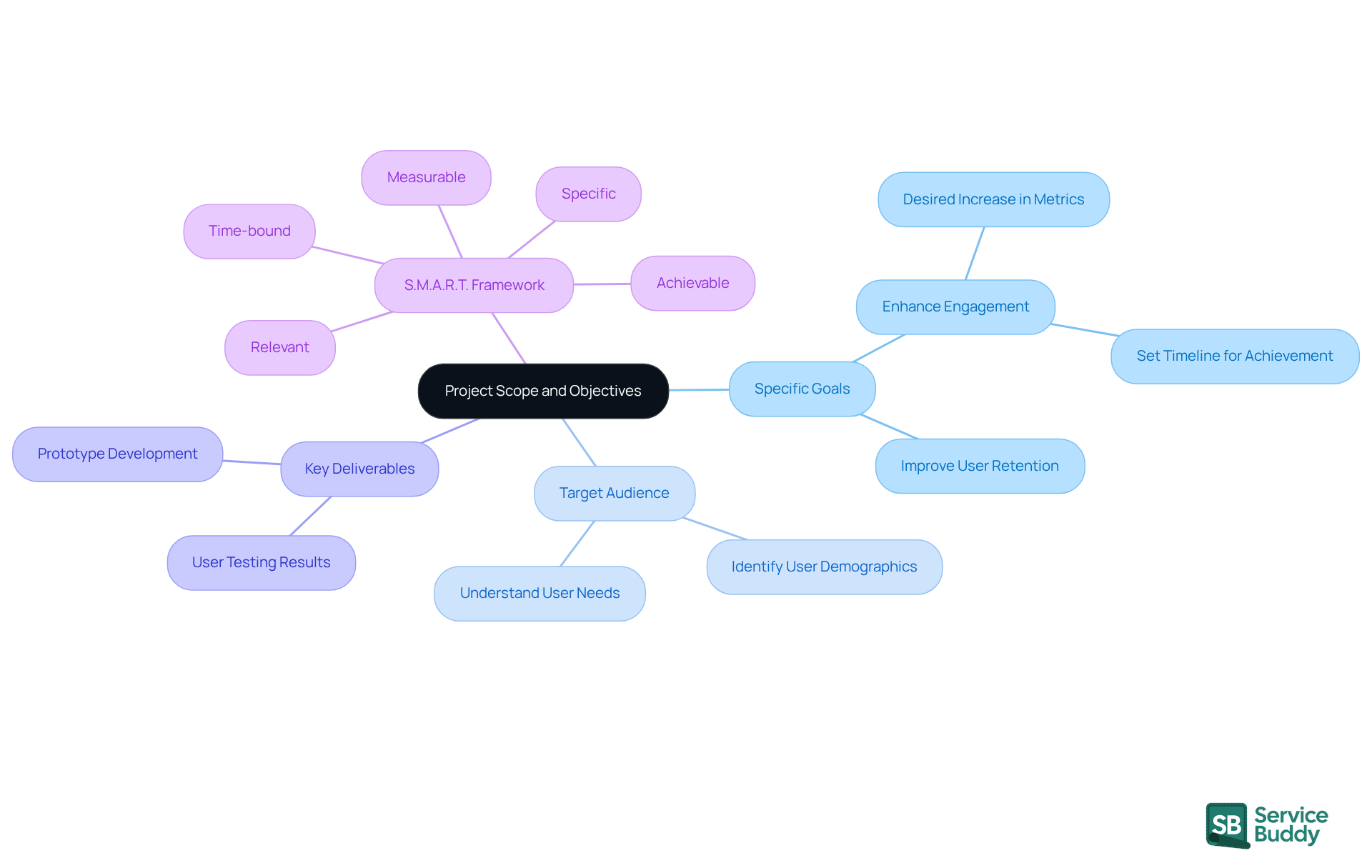
To kick off a successful UX development project, it’s crucial to define the project scope and objectives clearly. What are the specific goals? Who is the target audience? What key deliverables do you aim to achieve? Utilizing frameworks like S.M.A.R.T. (Specific, Measurable, Achievable, Relevant, Time-bound) can help articulate these objectives effectively. For example, if your goal is to enhance engagement, specify the desired increase in engagement metrics and set a timeline for achieving this.
Involving stakeholders in this process is not just beneficial; it’s essential. When everyone is aligned, you foster a collaborative environment that drives targeted development efforts. This alignment not only enhances the project’s focus but also ensures that all voices are heard, paving the way for a more successful outcome. So, are you ready to take the first step towards a more structured and effective UX development process?
Conduct Comprehensive User Research
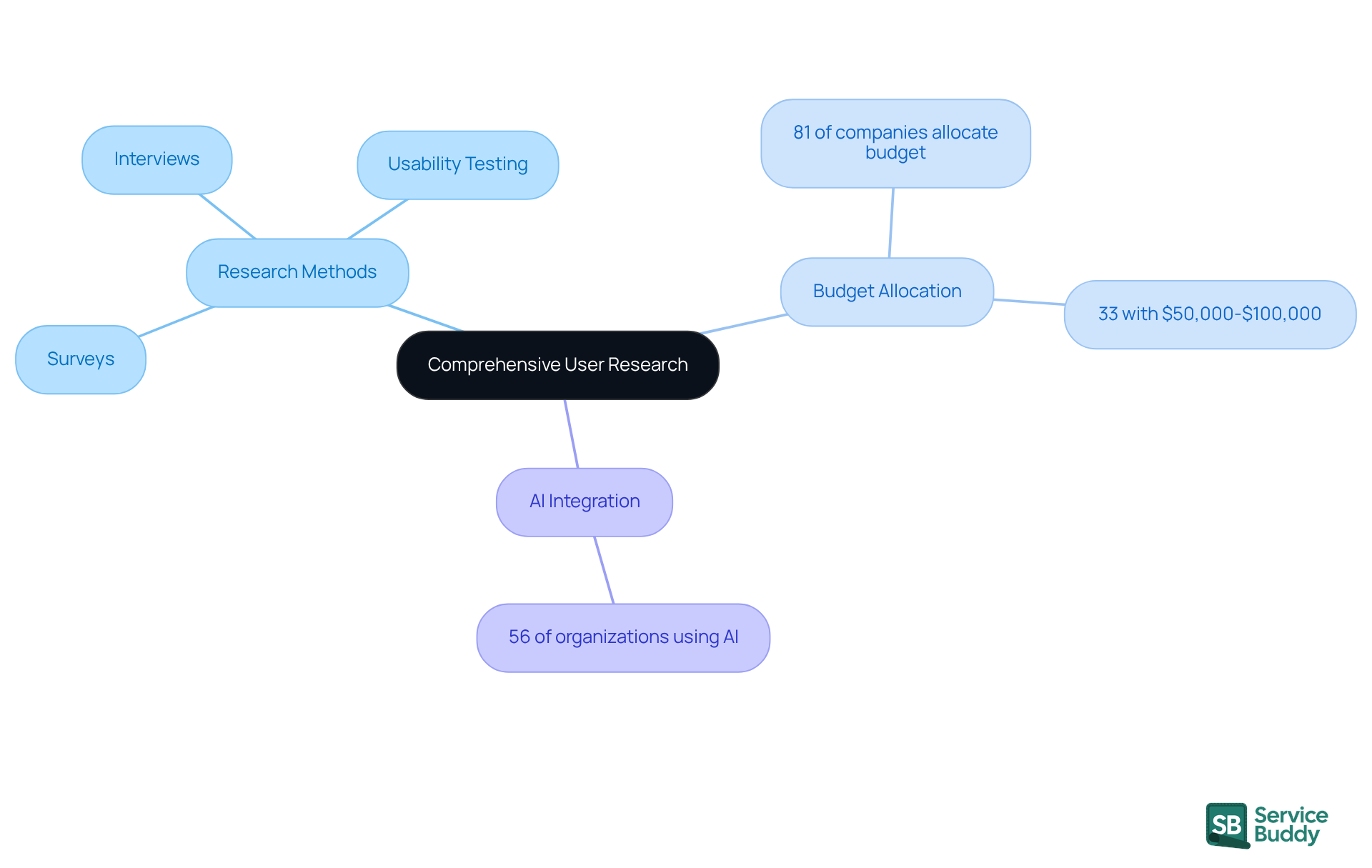
Effective UX design hinges on comprehensive participant research. By employing a balanced approach that combines qualitative and quantitative methods - like surveys, interviews, and usability testing - designers can extract invaluable insights into user preferences and pain points. For instance, participant interviews often uncover specific frustrations with existing products, while surveys gauge these issues across a broader audience. This dual approach not only enhances understanding but also aids in crafting personas that accurately reflect key user segments.
These personas serve as essential tools in guiding the workflow of UX design studios for founders, ensuring that solutions are tailored to meet genuine user needs. Notably, 81% of companies allocate a dedicated budget for UX research, with 33% maintaining an annual budget of approximately $50,000 to $100,000. This underscores the critical role of UX research in driving effective outcomes. Moreover, 56% of organizations have begun integrating AI into their UX research processes. While AI is not poised to replace UX designers, it significantly amplifies their capabilities.
By prioritizing user research, businesses can markedly refine their strategies and enhance user satisfaction. As Ella Webber aptly points out, the increasing significance of UX research is reshaping business decisions and product strategies. Are you ready to elevate your approach to UX design?
Implement Prototyping and User Testing
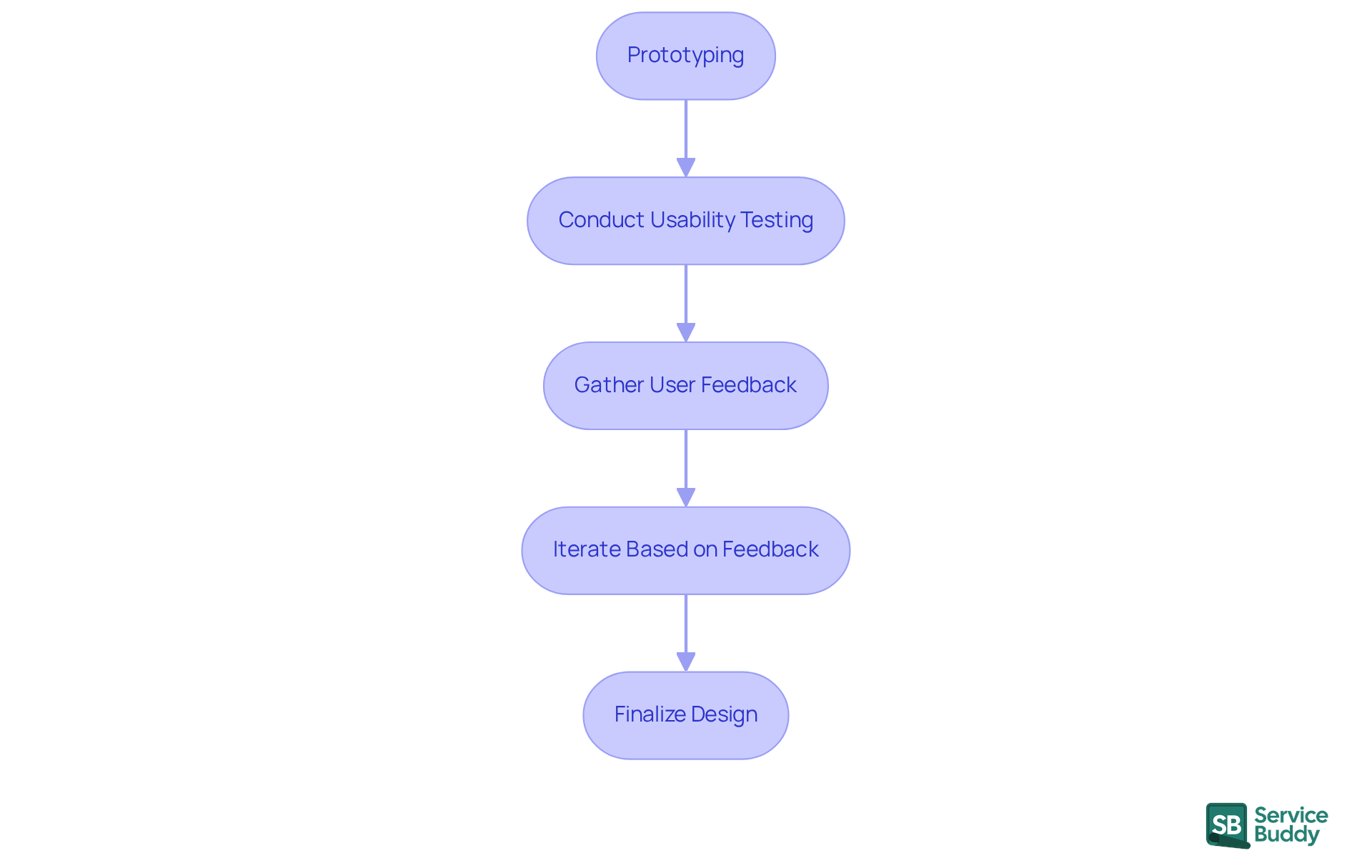
Prototyping is a cornerstone in the workflow of a UX design studio for founders, empowering designers to craft low-fidelity prototypes that not only visualize concepts but also invite early feedback. Tools like Figma and Adobe XD streamline this process, enabling rapid iterations that keep pace with evolving ideas. But what happens once these prototypes are in place? Conducting usability testing sessions with real participants becomes essential. By monitoring interactions, designers can uncover navigation challenges and other usability issues, yielding invaluable insights for improvement.
Consider this: if users struggle to navigate a prototype, their feedback can guide critical modifications before advancing to high-fidelity models. Iterating based on such feedback not only enhances usability but also ensures that the final product aligns with user expectations. Alarmingly, only 13% of organizations have a UX leader in the C-suite, underscoring the urgent need for a stronger focus on user-centered methodologies.
Moreover, organizations that prioritize usability testing reap significant rewards. Successful UX enhancements can lead to substantial increases in conversion rates, highlighting the necessity of integrating testing into the development process. As Steve Krug aptly states, testing with real users is vital for identifying usability issues. Ignoring user feedback can result in dire consequences; after all, 88% of users will abandon an app if it consistently encounters glitches or bugs. Are you ready to prioritize user feedback and elevate your UX design?
Foster Collaboration and Communication
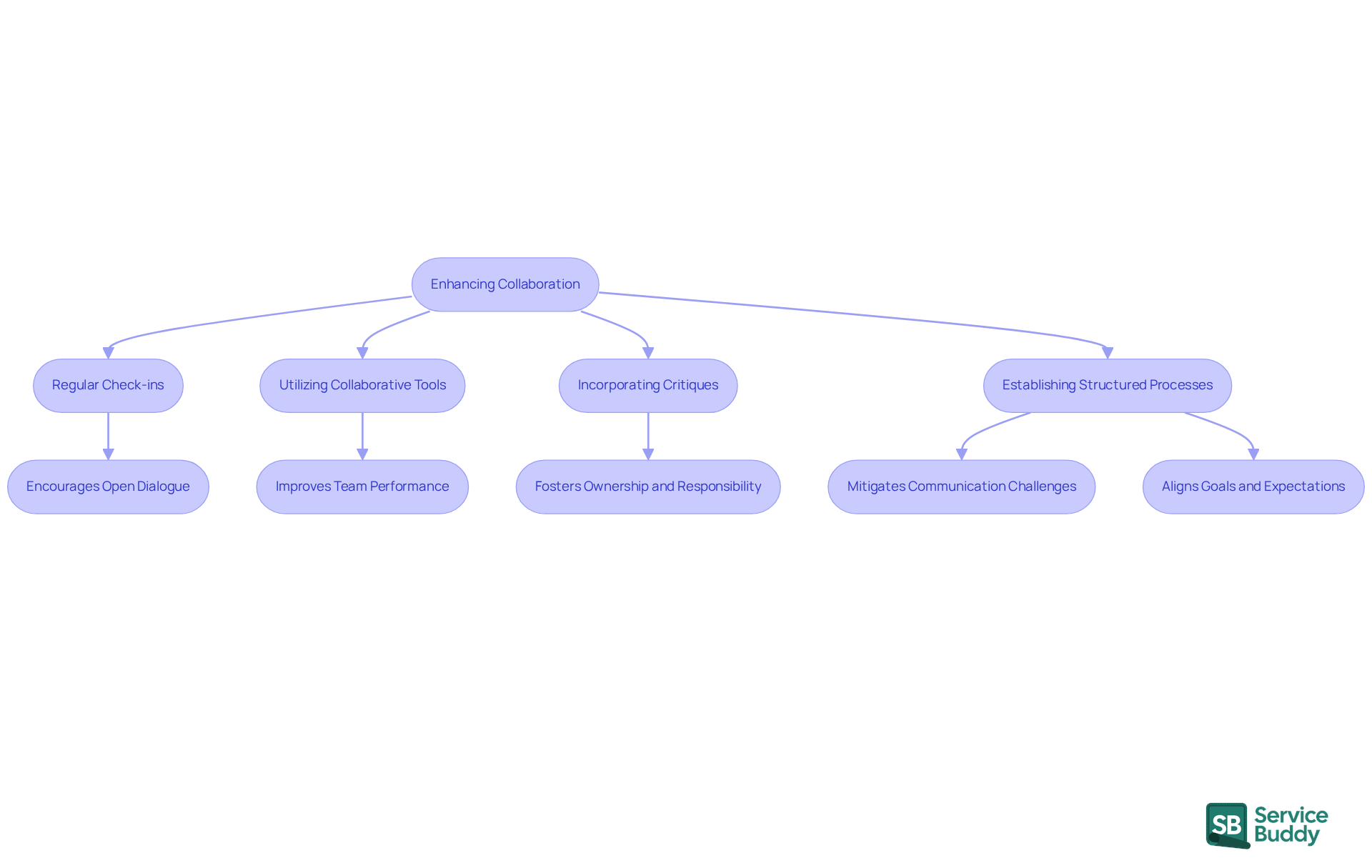
To enhance collaboration within your UX group, start by establishing regular check-ins and utilizing collaborative tools like Slack or Microsoft Teams for ongoing communication. This approach encourages open dialogue, allowing team members to share ideas and feedback freely. Have you considered incorporating critiques where team members showcase their work and receive constructive feedback? This practice not only elevates the quality of creations but also fosters a sense of ownership and responsibility among team members.
Regular communication is crucial; it significantly improves team performance by aligning goals and expectations, ultimately leading to more successful project outcomes. In fact, research shows that 63% of workers have wasted time at work due to communication problems and poor collaboration. This statistic highlights the critical need for effective communication strategies. As Tara Hall emphasizes, collaboration is essential for success. Establishing a structured process for communication can help mitigate challenges such as unclear roles and responsibilities among team members.
Establish a Consistent Design System
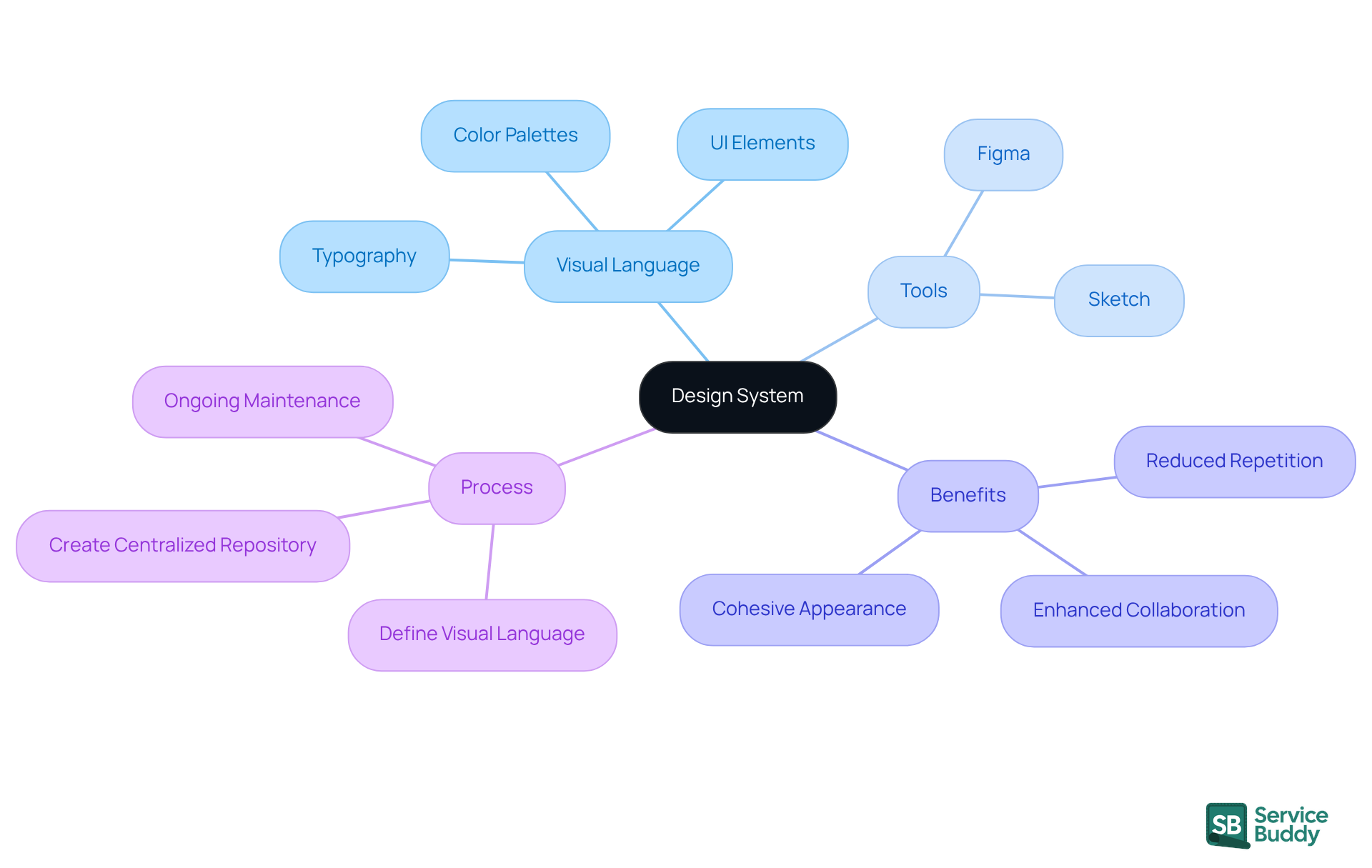
Creating a robust framework is crucial for documenting principles, components, and guidelines that can be reused across various projects. Start by defining your brand's visual language, which includes typography, color palettes, and UI elements. Tools like Figma or Sketch enable the creation of a centralized repository for these assets, making access and updates seamless.
A reliable framework significantly reduces repetition, enhances collaboration among team members, and ensures that all products exhibit a cohesive appearance and ambiance. This consistency not only elevates the user experience but also strengthens brand identity, allowing users to connect more easily with your offerings. As design leaders emphasize, investing in a well-executed framework can transform creativity into a strategic asset, boosting operational efficiency and driving revenue growth.
Consider this: creators who implement an effective framework complete tasks 34% faster than those who do not. This statistic underscores the tangible benefits of such frameworks. Maya Brennan notes, "A well-constructed and executed framework can assist companies in recognizing the true value of aesthetics as a strategic investment." Successful examples of framework implementation demonstrate that organizations can achieve significant improvements in project efficiency, with teams finishing tasks notably quicker when utilizing an appropriate framework.
By prioritizing the development of a strong framework, companies can streamline their processes through a workflow ux design studio for founders and foster a more engaging experience for their users. However, it's essential to acknowledge that creating a design system is a time-intensive process that demands ongoing maintenance and evolution to remain effective.
Conclusion
Establishing an efficient workflow in a UX design studio is crucial for founders who want to create user-centered products. By implementing best practices - like defining project scope, conducting thorough user research, prototyping, fostering collaboration, and creating a consistent design system - studios can streamline their processes and significantly enhance project outcomes. Each of these elements contributes to a structured approach that not only boosts team efficiency but also ensures that the final products resonate with users.
Key insights from this article underscore the importance of clear objectives and stakeholder involvement from the start. User research plays a critical role in understanding audience needs, while iterative testing is essential for refining designs. Moreover, fostering a collaborative environment and establishing a cohesive design system can greatly enhance creativity and efficiency within teams. These practices empower designers to craft solutions that are not just functional but also engaging and aligned with user expectations.
In conclusion, prioritizing these best practices in workflow management can revolutionize the UX design process, ultimately leading to better user experiences and successful products. Founders are urged to embrace these strategies and continuously adapt their workflows to meet the industry's evolving demands. By doing so, they can drive innovation and ensure their design studios thrive in a competitive landscape.
Frequently Asked Questions
Why is it important to define project scope and objectives in UX development?
Defining project scope and objectives is crucial to ensure clarity on specific goals, target audience, and key deliverables, fostering a collaborative environment that drives focused development efforts.
What framework can help articulate project objectives effectively?
The S.M.A.R.T. framework (Specific, Measurable, Achievable, Relevant, Time-bound) can help in articulating project objectives clearly.
How can stakeholder involvement impact the UX development process?
Involving stakeholders is essential as it fosters alignment and collaboration, ensuring that all voices are heard and enhancing the project's focus for a more successful outcome.
What methods should be employed for effective user research in UX design?
A balanced approach that combines qualitative methods (like interviews) and quantitative methods (like surveys and usability testing) should be employed to extract valuable insights into user preferences and pain points.
How do participant interviews and surveys contribute to user research?
Participant interviews uncover specific frustrations with existing products, while surveys gauge these issues across a broader audience, enhancing understanding and aiding in crafting accurate user personas.
What role do personas play in UX design?
Personas serve as essential tools that guide the workflow of UX design studios, ensuring that solutions are tailored to meet genuine user needs.
What is the significance of budgeting for UX research?
The allocation of a dedicated budget for UX research highlights its critical role in driving effective outcomes, with many companies maintaining significant annual budgets for this purpose.
How is AI being integrated into UX research processes?
56% of organizations have begun integrating AI into their UX research processes, which amplifies the capabilities of UX designers without replacing them.
What impact does prioritizing user research have on businesses?
Prioritizing user research helps businesses refine their strategies and enhance user satisfaction, ultimately reshaping business decisions and product strategies.
List of Sources
- Define Project Scope and Objectives
- 40+ Product Design Statistics: UX Metrics, ROI Benchmarks & Data for 2026 (https://designrush.com/agency/product-design/trends/product-design-statistics)
- 20 Inspiring UX Quotes You Should Remember (https://blog.uxtweak.com/ux-quotes)
- 50+ UX Statistics To Convince Stakeholders 2025 (https://uxcam.com/blog/ux-statistics)
- Top 17 Quotes on User Experience and UX Design (https://medium.com/@userguiding/top-17-quotes-on-user-experience-and-ux-design-b39e615e8db1)
- 30+ Essential UX Stats for 2025 Strategy | Maze (https://maze.co/blog/ux-statistics)
- Conduct Comprehensive User Research
- 30+ Essential UX Stats for 2025 Strategy | Maze (https://maze.co/blog/ux-statistics)
- UX Research Statistics to Win Over Stakeholders | User Interviews (https://userinterviews.com/blog/15-user-experience-research-statistics-to-win-over-stakeholders-in-2020)
- The State of User Research Report 2025 (https://userinterviews.com/state-of-user-research-report)
- The Importance Of User Research In UX Design | AWA Digital (https://awa-digital.com/blog/the-importance-of-user-research)
- The State of UX in 2025 (https://userlytics.com/resources/whitepaper/the-state-of-ux-2024)
- Implement Prototyping and User Testing
- 20 Inspiring UX Quotes You Should Learn as a UX Designer - UX Design World (https://uxdworld.com/20-inspiring-ux-quotes-you-should-learn-as-ux-designer)
- 40+ Product Design Statistics: UX Metrics, ROI Benchmarks & Data for 2026 (https://designrush.com/agency/product-design/trends/product-design-statistics)
- 20 Inspiring UX Quotes You Should Remember (https://blog.uxtweak.com/ux-quotes)
- 50+ UX Statistics To Convince Stakeholders 2025 (https://uxcam.com/blog/ux-statistics)
- 20 User Research and UX Quotes to Inspire You | User testing and UX research platform (https://sharewell.eu/20-user-research-and-ux-quotes-to-inspire-you)
- Foster Collaboration and Communication
- 70+ Memorable UX Research Quotes to Inspire Your Team (https://userinterviews.com/blog/user-research-and-ux-quotes-to-inspire-you-your-team)
- Crossfunctional Collaboration: Challenges and Strategies for Success (https://nngroup.com/articles/ux-collaboration-challenges)
- How to Collaborate Across Teams Without Losing Your Mind (https://indeed.design/article/how-to-collaborate-across-teams-without-losing-your-mind)
- Case Studies Archive | Actbold (https://actbold.com/case_studies)
- 31 statistics about collaboration in the workplace in 2025 (https://zoom.com/en/blog/workplace-collaboration-statistics)
- Establish a Consistent Design System
- How to Build Your Startup’s First Design System (https://medium.com/design-bootcamp/how-to-build-your-startups-first-design-system-4d8724fbb802)
- Measuring the value of design systems | Figma Blog (https://figma.com/blog/measuring-the-value-of-design-systems)
- ROI of Having a Design System (https://netguru.com/blog/roi-design-systems)
- 15 Inspiring UX Quotes for Innovation and Design (https://interaction-design.org/literature/article/ux-quotes?srsltid=AfmBOorOfpZ6NPQjQE4qCzj32bvoX_uYRbzWZt-pQcDvpECPJ4jPaJ-G)
Related Blog Posts

.svg)

See Service Buddy in action with a live demo
Everything you need to run your flooring business, Service Buddy is your all-in-one management platform.