
4 Steps to Master SaaS Category Design for Startups
Master SaaS category design for startups with these essential four steps.


Introduction
Crafting a distinct category within the competitive landscape of Software as a Service (SaaS) is crucial for startups aiming for success. Mastering the principles of SaaS category design not only opens unique market opportunities but also fosters deeper connections with target audiences. Yet, the journey to effective category design is not without its challenges. How can startups navigate these complexities to forge a compelling identity that truly resonates with customers?
By understanding the nuances of category design, emerging companies can position themselves strategically in the market. This approach not only differentiates them from competitors but also enhances their appeal to potential clients. As we delve deeper into this topic, we will explore actionable insights that can empower startups to overcome obstacles and thrive in the SaaS arena.
Understand SaaS Category Design
SaaS category design refers to the process of defining and establishing a unique market category for your software product. This involves understanding the competitive landscape, identifying gaps in the market, and articulating how your solution addresses specific customer needs. Start by researching existing categories and analyzing competitors to determine where your product fits. Consider the following:
- Market Research: Investigate the SaaS category design for startups and identify trends. Look for underserved niches that your product can target.
- Value Proposition: Clearly define what makes your product unique. What problems does it solve that others do not?
- Target Audience: Identify who will benefit most from your solution. Understanding your audience is key to effective marketing and product development.
- Positioning Statement: Craft a concise statement that encapsulates your product's unique value and target market. This will guide your branding and marketing efforts.

Implement the SaaS Category Design Process
To effectively implement the SaaS category design process, follow these essential steps:
-
Define Your Category: Start by clearly articulating the new category you aim to create. It’s vital that this definition resonates with your target audience and distinguishes itself from existing categories. This foundational step is crucial for establishing a unique market presence within the SaaS category design for startups.
-
Develop a Go-to-Market Strategy: Next, craft a comprehensive marketing plan that emphasizes your unique value proposition. Utilize effective channels like social media, content marketing, and industry events to connect with your target audience. Looking ahead to 2025, successful software-as-a-service startups will increasingly rely on data-driven strategies as part of their SaaS category design for startups to enhance their outreach efforts. Notably, the average SaaS spend per employee reached $4,830 in 2025, highlighting the financial commitment necessary for effective marketing strategies.
-
Build a Community: Foster interaction with prospective clients and industry leaders to cultivate a community around your sector. This can involve creating forums, hosting webinars, and establishing social media groups. Consider this: companies employing a product-led growth strategy experience 30% higher retention rates than those using traditional sales-led models. This statistic underscores the importance of community engagement in boosting customer loyalty and retention.
-
Iterate Based on Feedback: After launching your product, actively seek feedback from customers to refine your offering. This iterative process allows you to adjust your positioning within the segment and better meet the needs of your audience, ultimately driving growth and enhancing customer satisfaction. Companies that prioritize feedback mechanisms often witness a significant increase in user engagement and retention rates.

Utilize Tools and Resources for Implementation
To effectively navigate the saas category design for startups, it is essential to utilize the right tools and resources. Here are several key categories to consider:
-
Market Research Tools: Platforms like Statista and IBISWorld provide comprehensive data on market trends and consumer behavior. This information is crucial for making informed strategic decisions.
-
Customer Feedback Tools: Tools such as SurveyMonkey and Typeform are invaluable for gathering insights from prospective clients about your product and its market placement. In-app surveys can significantly boost response rates and feedback validity. In fact, a mere 5% reduction in churn can lead to a profit increase of up to 95%. This statistic underscores the financial benefits of effective customer feedback collection.
-
Community Building Platforms: Engage with your audience through social media channels like LinkedIn and Facebook. Establishing dedicated groups fosters conversations about your niche, enhancing user engagement and loyalty.
-
Project Management Software: Employ tools like Trello or Asana to streamline your implementation process. These platforms help track tasks and deadlines, ensuring your project remains organized and on schedule.
By incorporating these tools into your software strategy, which aligns with the saas category design for startups, you can enhance customer experience, gather actionable feedback, and ultimately drive growth in your flooring business. As Tony Hsieh wisely stated, "Open, honest communication is the best foundation for any relationship." This principle is vital in cultivating a customer-centric approach.

Troubleshoot Common Implementation Challenges
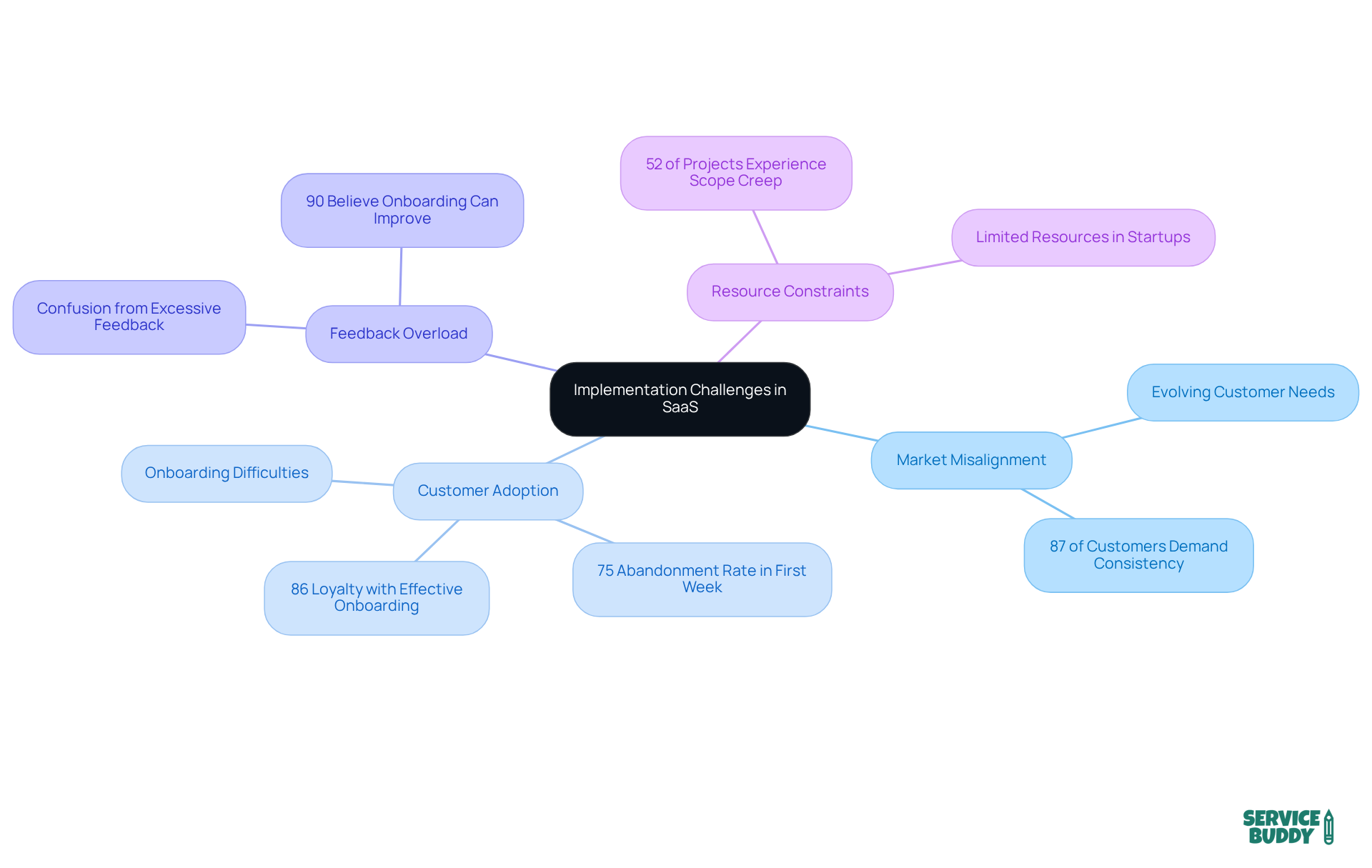
Implementing SaaS category design presents several common challenges that can hinder success:
-
Market Misalignment: Ensuring your offering meets the evolving needs of your target market is crucial. Regularly revisiting market research keeps you attuned to customer expectations and industry trends. Did you know that 87% of customers believe companies should enhance their consistency in delivering experiences? Staying aligned with these expectations is vital for your success.
-
Customer Adoption: One of the most significant obstacles to customer adoption is often the onboarding process. Statistics reveal that 75% of individuals abandon a product within the first week if they encounter difficulties during onboarding. To combat this, consider enhancing your onboarding experience with tailored training materials and interactive features that engage participants from the start. Furthermore, 86% of clients will remain loyal if onboarding and continued education are provided, underscoring the importance of effective onboarding in customer retention.
-
Feedback Overload: While gathering feedback is essential for product improvement, too much input can lead to confusion and misalignment with your core value proposition. Focus on feedback that directly supports your category objectives. In fact, 90% of customers believe companies can improve onboarding experiences. Are you prioritizing the right feedback?
-
Resource Constraints: Startups often operate with limited resources, making it essential to focus on high-impact activities. Outsourcing non-essential tasks can help maintain operational efficiency, allowing your team to concentrate on strategic initiatives that drive client adoption and retention. It's also important to recognize that scope creep affects 52% of software as a service projects, which can further strain resources.
By addressing these challenges with targeted strategies, SaaS startups can significantly enhance user adoption rates and ensure their products remain aligned with market demands.
Conclusion
Mastering SaaS category design is crucial for startups looking to carve out a unique niche in a competitive landscape. By defining a distinct category, developing a robust go-to-market strategy, building a community, and iterating based on customer feedback, startups can position themselves for success. This structured approach not only enhances visibility but also fosters deeper connections with target audiences.
Key insights from the article underscore the significance of thorough market research, a compelling value proposition, and effective customer engagement. Startups must navigate common challenges such as market misalignment, customer adoption hurdles, and resource constraints. By leveraging the right tools and focusing on high-impact activities, startups can streamline their efforts and drive growth.
Ultimately, implementing a well-thought-out SaaS category design is not merely a strategic choice; it is a necessary step toward achieving long-term success in the software industry. Embracing these principles will empower startups to meet evolving customer needs and stand out in an increasingly crowded marketplace. Taking action today can lead to significant competitive advantages tomorrow, making it imperative for startups to prioritize their SaaS category design initiatives.
Frequently Asked Questions
What is SaaS category design?
SaaS category design is the process of defining and establishing a unique market category for a software product, which involves understanding the competitive landscape, identifying market gaps, and articulating how the solution meets specific customer needs.
How can I begin the process of SaaS category design?
Start by researching existing categories and analyzing competitors to determine where your product fits in the market.
What should I focus on during market research for SaaS category design?
Focus on investigating the SaaS category design for startups, identifying trends, and looking for underserved niches that your product can target.
Why is defining a value proposition important in SaaS category design?
Defining a value proposition is important because it clearly articulates what makes your product unique and what specific problems it solves that others do not.
How can I identify my target audience in SaaS category design?
Identify your target audience by determining who will benefit most from your solution, as understanding your audience is crucial for effective marketing and product development.
What is a positioning statement, and why is it important?
A positioning statement is a concise statement that encapsulates your product's unique value and target market. It is important because it guides your branding and marketing efforts.
List of Sources
- Understand SaaS Category Design
- 50 Quick SaaS Statistics Every Business Should Know (https://cloudzero.com/blog/saas-statistics)
- 111 Unmissable SaaS Statistics for 2025 (https://zylo.com/blog/saas-statistics)
- SaaS statistics for 2025: Market trends, growth insights, and key metrics (https://hostinger.com/tutorials/saas-statistics)
- 85 SaaS Statistics, Trends and Benchmarks for 2025 - Vena (https://venasolutions.com/blog/saas-statistics)
- Top 13 SaaS Trends That Will Disrupt 2025 & The Future (https://rib-software.com/en/blogs/saas-trends)
- Implement the SaaS Category Design Process
- Tech Agency Case Study | Growth in Partnership with Britt Creative (https://brittcreative.co/case_studies/tech-agency-case-study)
- 111 Unmissable SaaS Statistics for 2025 (https://zylo.com/blog/saas-statistics)
- 40+ Statistics to Help Your SaaS Marketing Strategy in 2026 (https://sixthcitymarketing.com/2024/04/17/saas-marketing-stats)
- SaaS Marketing Statistics: Key Trends & Insights (2025) (https://citrusbug.com/blog/saas-marketing-statistics)
- Case study: Awardco (https://higherlogic.com/case_studies/awardco)
- Utilize Tools and Resources for Implementation
- 60 Customer Satisfaction Quotes to Inspire You to Start Measuring Customer Satisfaction Today (https://zonkafeedback.com/blog/customer-satisfaction-quotes)
- Customer Obsession Quotes: 100+ Statements to Inspire Teams (https://qualaroo.com/blog/customer-experience-quotes)
- 11 Ways to Collect Customer Feedback (+Best Practices) (https://userpilot.com/blog/collect-customer-feedback)
- 111 Unmissable SaaS Statistics for 2025 (https://zylo.com/blog/saas-statistics)
- Troubleshoot Common Implementation Challenges
- 51 Statistics You Need to Know: The State of SaaS Onboarding and Implementation | Cloud Coach (https://cloudcoach.com/blog/51-statistics-you-need-to-know-the-state-of-saas-onboarding-and-implementation)
- 12 Essential SaaS Onboarding Metrics to Track | Exec Learn (https://exec.com/learn/saas-onboarding-metrics)
- SaaS Customer onboarding and retention statistics - Custify Blog (https://custify.com/blog/saas-customer-onboarding-and-retention-statistics)
- 100+ User Onboarding Statistics You Need to Know in 2025 (https://userguiding.com/blog/user-onboarding-statistics)
Related Blog Posts


.svg)

See Service Buddy in action with a live demo
Everything you need to run your flooring business, Service Buddy is your all-in-one management platform.