
Craft Your Enterprise Positioning Strategy as a Startup
Learn how to craft a successful enterprise positioning strategy for your startup.


Introduction
Crafting a successful enterprise positioning strategy is essential for startups looking to carve out a niche in competitive markets. Understanding client needs and articulating a unique value proposition allows businesses to resonate effectively with their target audience, setting them apart from competitors. But how can startups navigate the complexities of market segmentation and competitor analysis?
This is where the challenge lies. Startups must ensure their offerings not only meet customer expectations but also stand out in a crowded landscape. This guide delves into the essential steps for defining a positioning strategy, empowering startups to thrive in an ever-evolving business environment. By following these insights, you can position your business for success and capture the attention of your ideal customers.
Define Your Unique Value Proposition
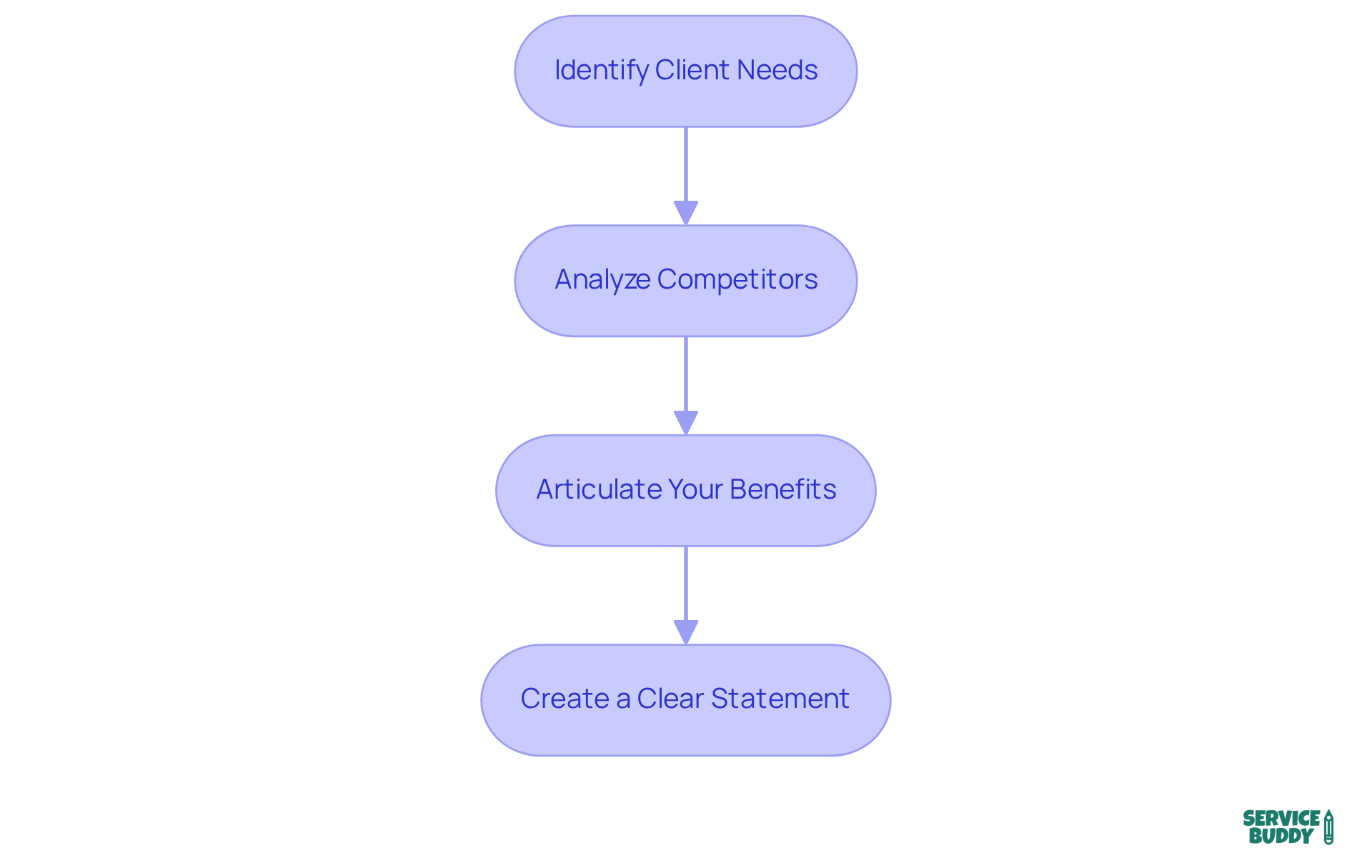
To define your unique value proposition, follow these essential steps:
-
Identify Client Needs: Start by conducting surveys or interviews to uncover what your potential clients truly value. Focus on their pain points and desires - what keeps them up at night?
-
Analyze Competitors: Take a close look at what your competitors are offering. Identify gaps in their value propositions. What are they missing that you can provide? This insight is crucial for positioning your business effectively.
-
Articulate Your Benefits: Clearly outline how your product or service addresses these issues or enhances your clients' situations. Use specific examples to illustrate these benefits, making it relatable and tangible.
-
Create a Clear Statement: Formulate a concise statement that encapsulates your unique value proposition. It should be simple to grasp and unforgettable. For instance, 'We assist retailers in optimizing operations and improving customer satisfaction through a comprehensive software solution.' This statement not only defines your offering but also resonates with your audience, prompting them to take action.
Identify Your Target Audience and Their Pain Points
To effectively identify your target audience and their pain points, follow these strategic steps:
-
Segment Your Market: Start by dividing the market for surface materials into distinct segments based on demographics, behaviors, and specific needs. Consider targeting flooring retailers, contractors, or DIY enthusiasts, each with unique requirements and purchasing behaviors.
-
Conduct Research: Utilize various research methods such as surveys, focus groups, and social media analytics to gather insights into your audience's preferences and challenges. Did you know that nearly 48% of homeowners research home improvement products online before making a purchase? This statistic highlights the importance of understanding their decision-making process. Additionally, 56% of Gen X DIYers conduct significant online research before making purchases, emphasizing the need for a strong digital presence.
-
Identify Pain Points: Analyze the collected data to uncover common pain points. Flooring retailers often face challenges like inefficient quoting processes, difficulties in managing client relationships, and the need for enhanced communication. Addressing these issues can significantly boost operational efficiency and client satisfaction. Quotes from flooring business owners about their biggest challenges can provide valuable insights into these pain points.
-
Create Client Personas: Develop detailed profiles for your ideal clients, incorporating their motivations, challenges, and how your product can address their specific needs. This approach not only helps tailor marketing strategies but also fosters a deeper connection with your audience. Notably, 62% of Millennial DIY enthusiasts perform thorough research prior to buying surface materials or associated items, underscoring the necessity of grasping buyer motivations.
By adopting these measures, businesses in the industry can navigate the complexities of the sector more effectively, ensuring they meet the evolving needs of their clients while preparing for growth in a competitive environment. The industry is projected to expand from USD 439.27 billion in 2025 to USD 646.70 billion by 2032, making effective segmentation and understanding customer pain points essential for success.

Analyze Competitors and Differentiate Your Offerings
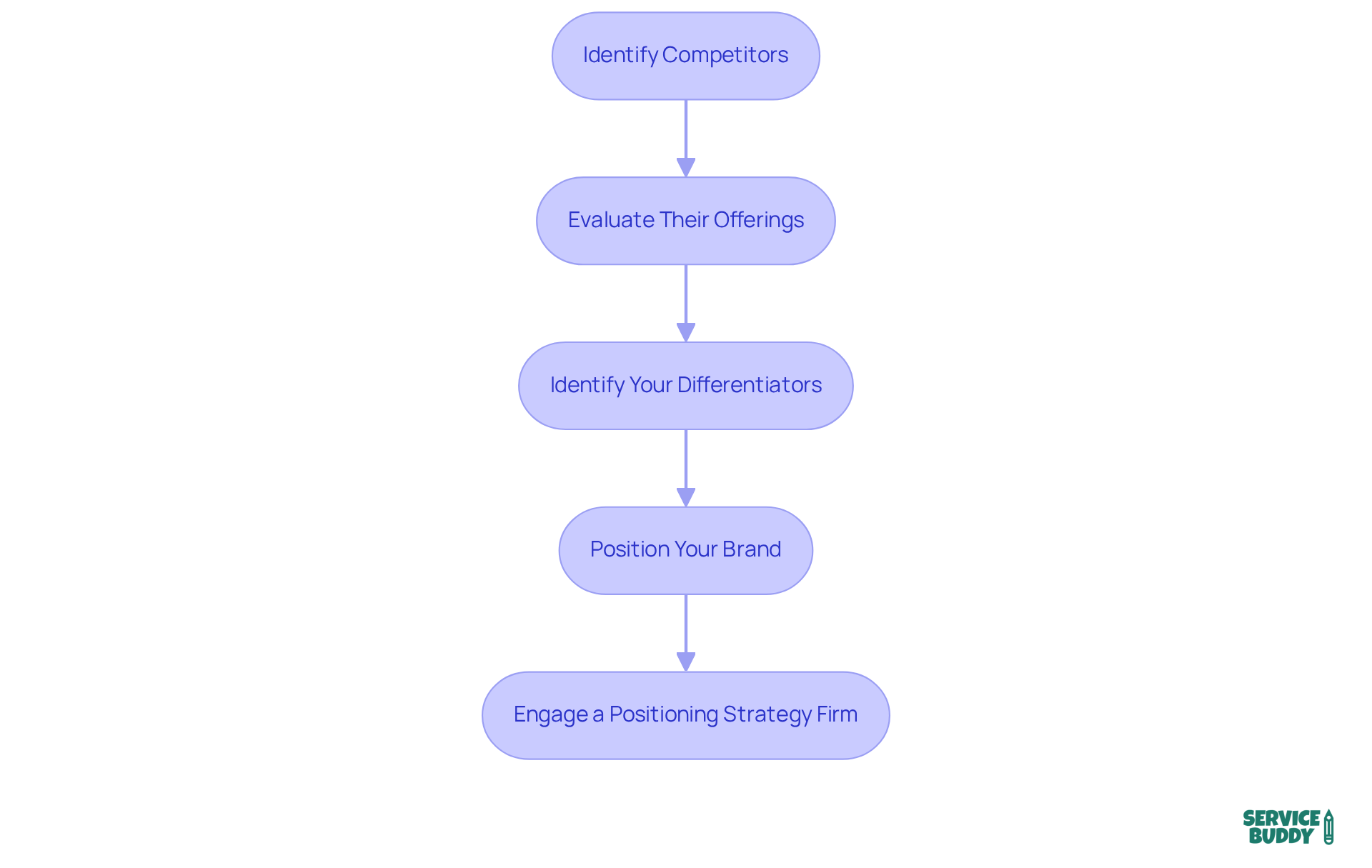
To effectively analyze competitors and differentiate your offerings in the flooring software market, follow these strategic steps:
-
Identify Competitors: Start by compiling a comprehensive list of both direct and indirect competitors within your niche. Utilize online tools and market research reports to gather relevant information about their operations and market presence. Who are your main rivals, and what are they doing?
-
Evaluate Their Offerings: Conduct a thorough assessment of competitors' products, pricing structures, marketing strategies, and client feedback. Identify their strengths and weaknesses to understand where they excel and where they may be lacking. What can you learn from their successes and failures?
-
Identify Your Differentiators: Pinpoint the unique aspects of your product that set it apart from the competition. This could include advanced technology features, exceptional client support, or a more intuitive user interface that enhances user experience. Consider incorporating AI and AR technologies, which are increasingly significant in the industry for boosting operational efficiency and client interaction.
-
Position Your Brand: Craft a compelling positioning statement that articulates how your offerings stand out in the market. For instance, "Unlike traditional software solutions, our platform integrates payment processing to expedite transactions specifically for flooring companies, ensuring quicker cash flow and improved client satisfaction." Emphasize the importance of adopting integrated technology solutions to enhance efficiency and client satisfaction, as highlighted by industry trends.
By following these steps, flooring businesses can engage an enterprise positioning strategy firm for startups to strategically position themselves in a competitive landscape, leveraging their unique strengths to attract and retain customers. Incorporating insights from industry analysts and adapting to digital marketing trends will further enhance your positioning strategy.
Craft Your Messaging and Communication Strategy
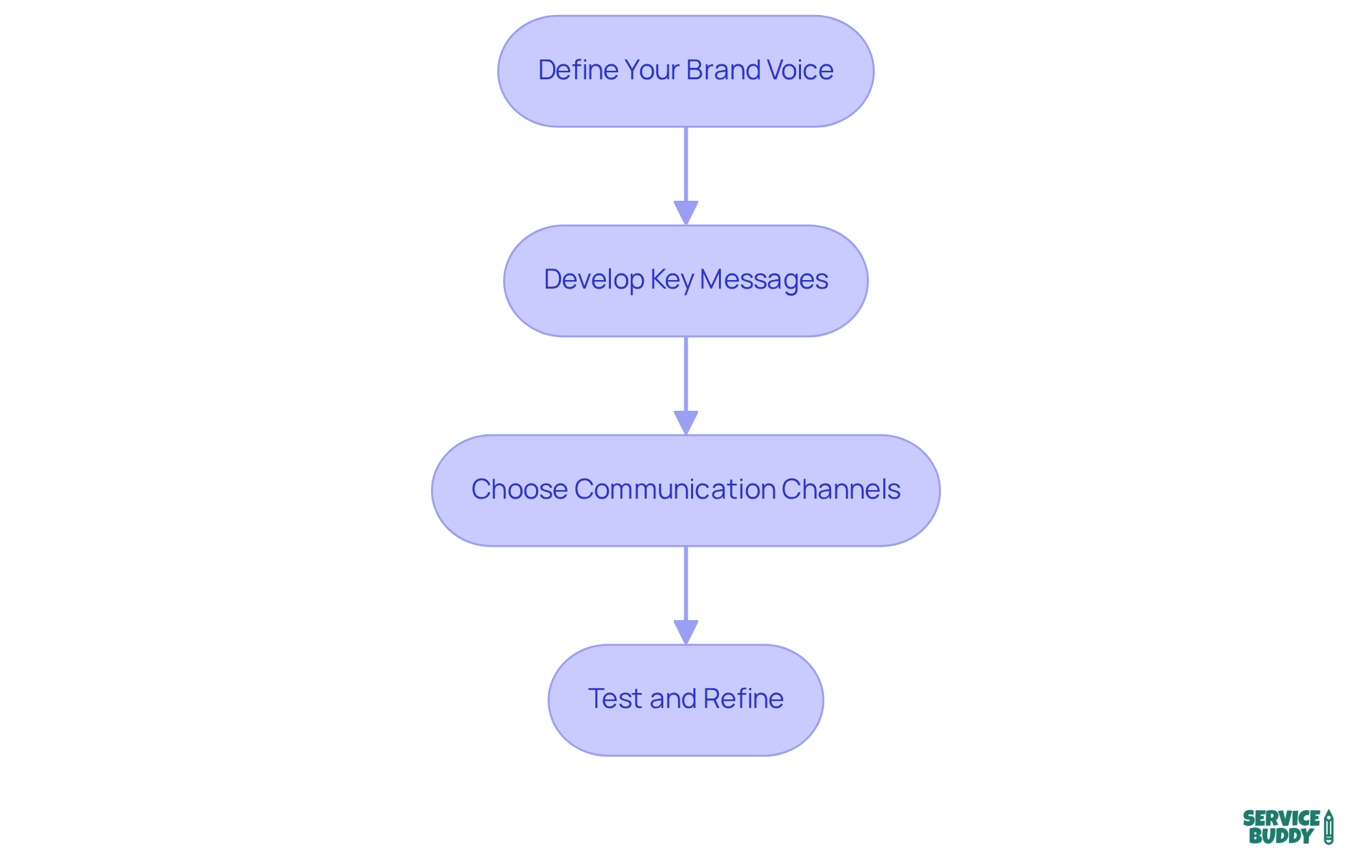
To effectively craft your messaging and communication strategy, follow these essential steps:
-
Define Your Brand Voice: Establish the tone and style of your communication. Should it be formal, friendly, or authoritative? Ensure it aligns with your brand identity and connects with your target group.
-
Develop Key Messages: Create a set of core messages that encapsulate your unique value proposition (UVP). These messages must directly address the pain points of your intended recipients, clearly highlighting how your solutions can alleviate their challenges.
-
Choose Communication Channels: Identify the most effective channels to engage with your target group. Consider options like social media platforms, email marketing campaigns, or participation in industry events, customizing each to where your target group is most active.
-
Test and Refine: Implement your messaging strategy and actively seek feedback. Utilize analytics to measure engagement levels and adjust your approach based on what resonates most with your audience. Continuous refinement is key to maintaining relevance and effectiveness in your communication efforts.
Conclusion
Crafting a successful enterprise positioning strategy is essential for startups aiming to carve out their niche in a competitive landscape. By defining a unique value proposition and understanding target audiences, startups can effectively differentiate themselves and resonate with potential clients. This strategic approach not only enhances visibility but also fosters deeper connections with clients, ultimately driving growth and success.
The systematic approach to positioning emphasizes identifying client needs and pain points. Thorough competitor analysis is crucial, encouraging startups to leverage their unique offerings to stand out in the marketplace. Moreover, a clear and compelling messaging strategy is vital for effectively communicating value to the target audience.
In a rapidly evolving market projected for significant growth in the coming years, startups must prioritize these strategies to meet customer needs and adapt to industry trends. By implementing the insights and steps discussed, entrepreneurs can establish a solid foundation for success, positioning their businesses to thrive in an increasingly competitive environment. Are you ready to take the next step and elevate your startup's positioning strategy?
Frequently Asked Questions
What is a unique value proposition (UVP)?
A unique value proposition is a clear statement that defines how a product or service meets the needs of clients in a way that is distinct from competitors, highlighting the specific benefits it offers.
How can I identify client needs for my UVP?
To identify client needs, you can conduct surveys or interviews to uncover what potential clients value most, focusing on their pain points and desires.
Why is analyzing competitors important when defining a UVP?
Analyzing competitors helps you identify gaps in their value propositions, revealing what they are missing that you can provide, which is crucial for effectively positioning your business.
What should I include when articulating the benefits of my product or service?
When articulating benefits, clearly outline how your product or service addresses client issues or enhances their situations, using specific examples to make these benefits relatable and tangible.
How do I create a clear statement for my UVP?
To create a clear statement for your UVP, formulate a concise and memorable sentence that encapsulates your unique offering and resonates with your audience, prompting them to take action. For example, 'We assist retailers in optimizing operations and improving customer satisfaction through a comprehensive software solution.'
List of Sources
- Define Your Unique Value Proposition
- Flooring Market Size, Share, Demand, Report, 2025-2032 (https://fortunebusinessinsights.com/flooring-market-102740)
- 51 Flooring Industry Statistics (https://bookcleango.com/blog/flooring-industry-statistics)
- Scoring flooring: Industry stats for 2024 - Floor Covering News (https://fcnews.net/2025/06/scoring-flooring-industry-stats-for-2024)
- TOP 20 FLOORING MARKETING STATISTICS 2025 | Amra And Elma LLC (https://amraandelma.com/flooring-marketing-statistics)
- Increasing Productivity With Software: Top flooring software providers describe the leading digital tools they’ve developed for their retail and flooring customers – May 2025 (https://floordaily.net/floorfocus/increasing-productivity-with-software-top-flooring-software-providers-describe-the-leading-d)
- Identify Your Target Audience and Their Pain Points
- TOP 20 FLOORING MARKETING STATISTICS 2025 | Amra And Elma LLC (https://amraandelma.com/flooring-marketing-statistics)
- Flooring Market Size, Share, Demand, Report, 2025-2032 (https://fortunebusinessinsights.com/flooring-market-102740)
- Flooring dealers reported mixed results in 2025 - Floor Covering News (https://fcnews.net/2025/11/flooring-dealers-reported-mixed-results-in-2025)
- How 2025 is Reshaping the Flooring Industry (https://floortrendsmag.com/articles/113307-how-2025-is-reshaping-the-flooring-industry)
- Analyze Competitors and Differentiate Your Offerings
- Analysis of a disruptive competitor in the hard surface flooring market (https://prescouter.com/case-study/hard-surface-flooring-market)
- Increasing Productivity With Software: Top flooring software providers describe the leading digital tools they’ve developed for their retail and flooring customers – May 2025 (https://floordaily.net/floorfocus/increasing-productivity-with-software-top-flooring-software-providers-describe-the-leading-d)
- :: Praxinet : the performance management experts (https://praxinet.com/case_studies.html)
- The right software makes all the difference - Floor Covering News (https://fcnews.net/2024/12/the-right-software-makes-all-the-difference)
- Case Studies | RCLCO Real Estate Consulting (https://rclco2024.lvdev.net/resources/case_studies)
- Craft Your Messaging and Communication Strategy
- 40 Marketing Quotes To Inspire You and Your Team (https://salesforce.com/blog/marketing-quotes)
- TOP 20 FLOORING MARKETING STATISTICS 2025 | Amra And Elma LLC (https://amraandelma.com/flooring-marketing-statistics)
- 365 Marketing Quotes to Keep You Fired Up All Year (https://skyword.com/contentstandard/marketing-quotes)
- QFloors Unveils Communication Tool for Installers | News | Floor Covering Weekly (https://floorcoveringweekly.com/main/topnews/qfloors-unveils-communication-tool-for-installers-42472)
- 160 Digital Marketing Quotes for Business Success (https://deliberatedirections.com/digital-marketing-quotes)
Related Blog Posts

.svg)
See Service Buddy in action with a live demo
Everything you need to run your flooring business, Service Buddy is your all-in-one management platform.