
5 Best Practices for Workflow UX Design Services in Flooring
Discover essential workflow UX design services best practices to enhance flooring industry solutions.


Introduction
In the competitive realm of flooring services, the success of any project hinges on the effectiveness of its workflow UX design. Implementing best practices in user and market research allows companies to uncover the nuanced needs of their target audience, from carpet retailers to service teams. But as the industry evolves, how can businesses ensure their designs not only meet user expectations but also stand out in a crowded marketplace?
This article explores five essential practices that can enhance UX design in flooring. These insights empower designers to create solutions that resonate with users and drive success. By understanding these practices, flooring business owners can navigate operational challenges and elevate their offerings in a dynamic market.
Conduct User and Market Research
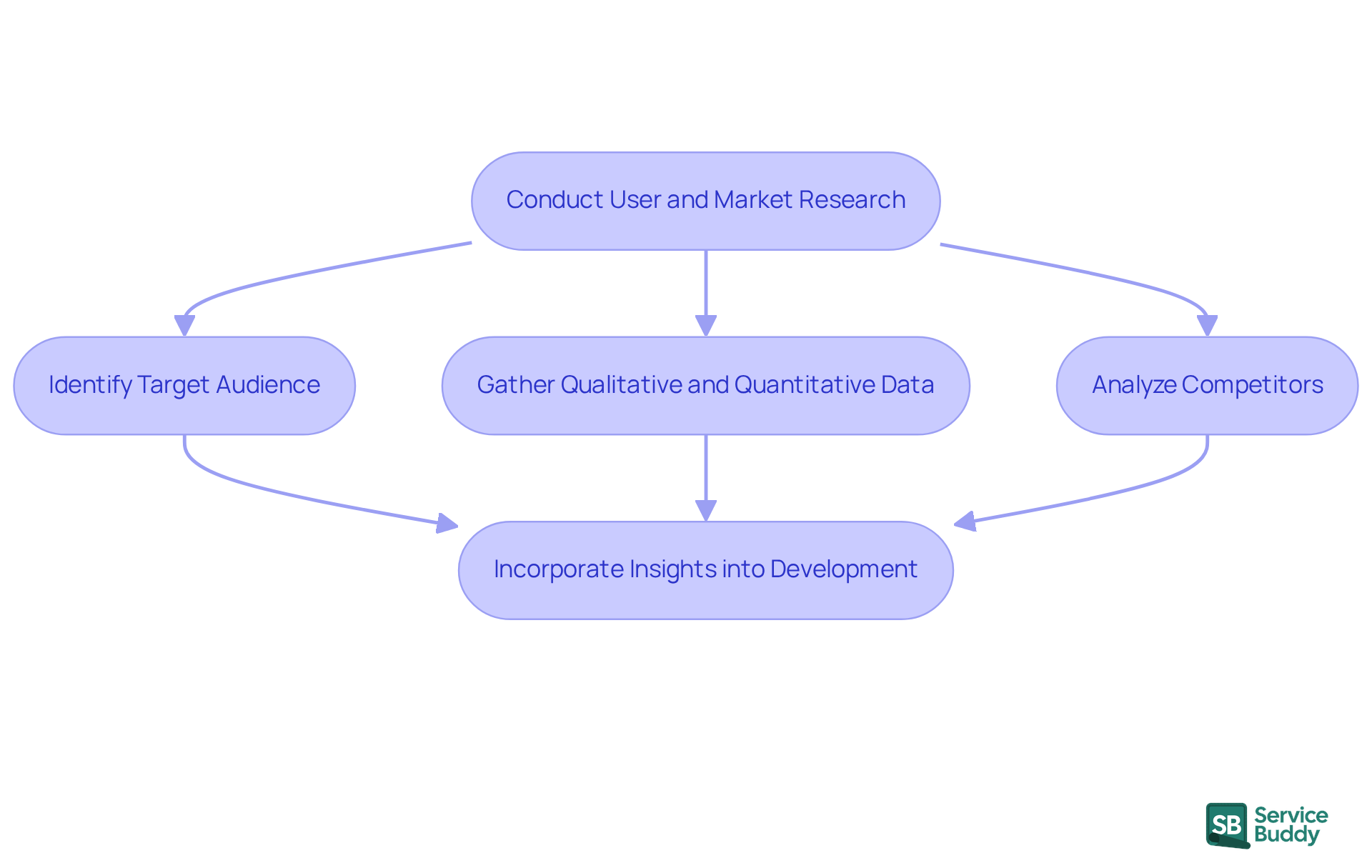
To create a successful workflow UX design that follows services best practices for surface services, begin with comprehensive user and market research. Recognizing your target audience - carpet retailers, rug cleaners, and service teams - is crucial. How well do you understand their pain points and preferences? Utilize methods like surveys, interviews, and focus groups to gather both qualitative and quantitative data. For example, insights into how flooring professionals currently manage quoting and job management can highlight gaps in existing solutions.
Moreover, examining your competitors can provide valuable insights into market trends and consumer expectations. What are they doing right, and where do they fall short? This research will serve as the foundation for your development process and will incorporate workflow UX design services best practices, ensuring that the final product not only meets user needs but also aligns with market demands. By prioritizing this step, you position yourself to create a solution that truly resonates with your audience.
Define Problems and Set Clear Goals
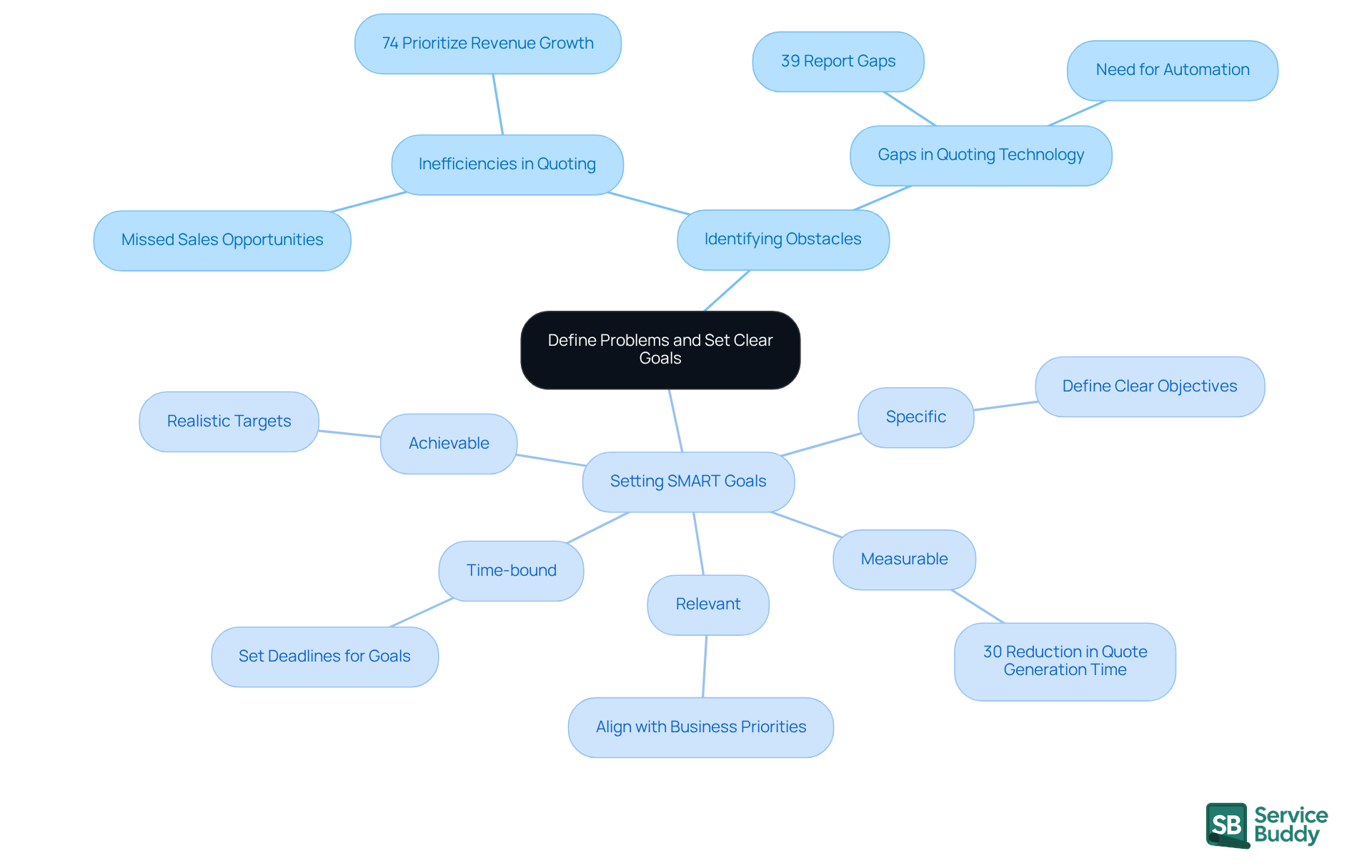
Recognizing the specific obstacles that flooring experts encounter is crucial for effective UX development. Start by crafting clear problem statements that pinpoint issues like inefficiencies in quoting and job management. For example, a well-defined problem statement could be: 'Flooring retailers struggle to generate accurate quotes quickly, leading to missed sales opportunities.' This is not just a minor issue; according to Malini Rosenthal, '74% of respondents identified revenue growth as their number one priority,' highlighting the urgent need to tackle these inefficiencies. Furthermore, the survey reveals that '39% of respondents reported gaps in quoting technology,' directly linking to the challenges in quoting.
Once these challenges are articulated, it's essential to establish SMART (Specific, Measurable, Achievable, Relevant, Time-bound) goals to define success for your project. For instance, aiming for a 30% reduction in quote generation time within three months of implementation could be a solid target. However, be wary of common pitfalls in setting SMART goals, such as making them too vague or unrealistic. These clear objectives will not only guide your creative choices but also provide a framework for assessing the impact of your solutions in a rapidly evolving market.
Develop Information Architecture and User Flow
With clear objectives established, it’s time to focus on crafting the information structure and experience pathway for your workflow ux design services best practices. Begin by logically structuring content according to workflow ux design services best practices, ensuring individuals can easily find the information they need. A well-organized sitemap is essential for implementing workflow ux design services best practices; it should outline your platform's structure, categorizing features like:
- Quoting
- Job management
- Client communication
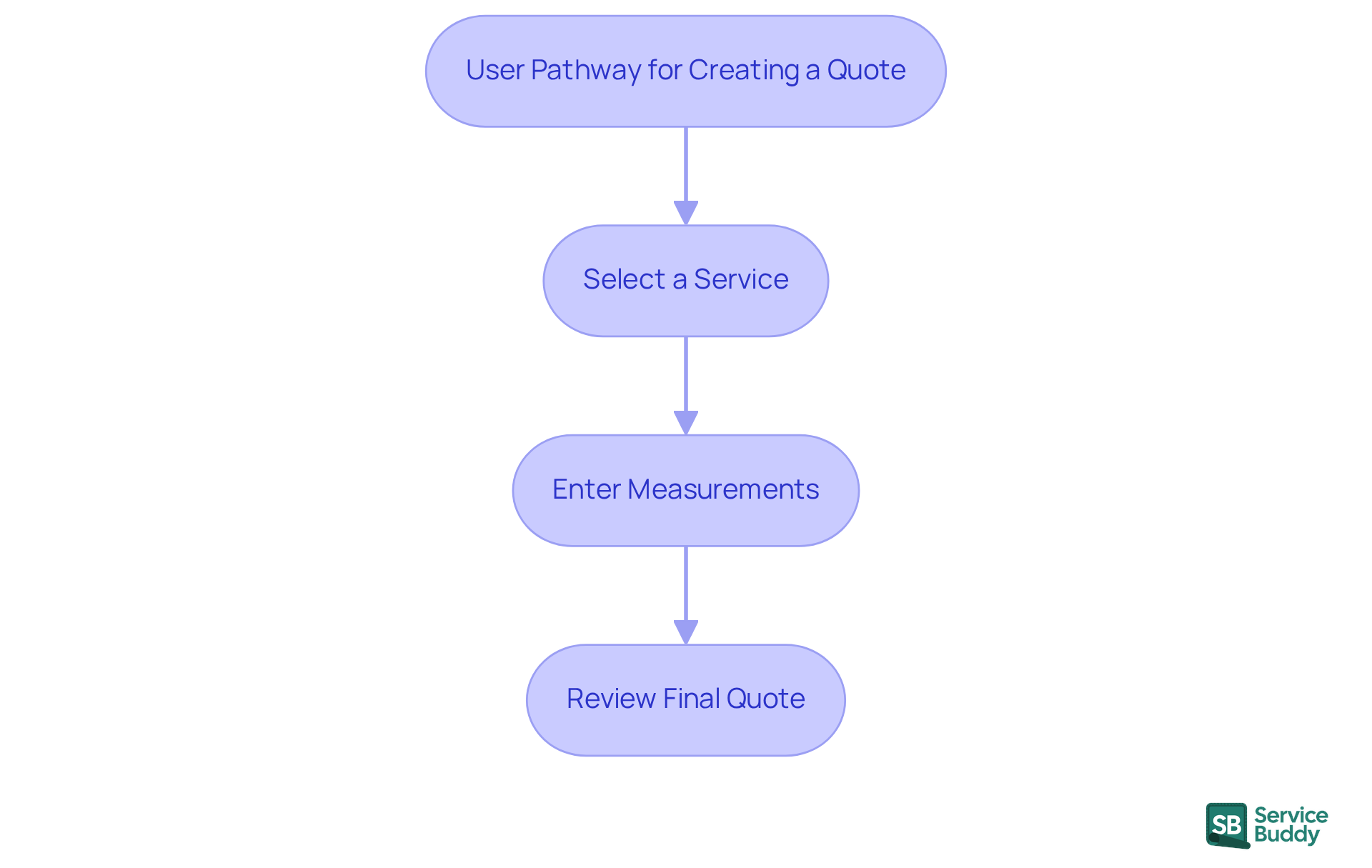
Next, develop pathways that detail the steps individuals will take to accomplish tasks, following workflow ux design services best practices. For instance, a customer pathway for creating a quote might include steps such as:
- Selecting a service
- Entering measurements
- Reviewing the final quote
Visualizing these pathways allows you to identify potential obstacles and enhance the user experience by utilizing workflow ux design services best practices, making it as seamless as possible.
Statistics reveal that optimizing navigation can lead to a 31% increase in productivity, underscoring the importance of thoughtful arrangement in boosting operational effectiveness within the carpet sector. Furthermore, as AI technology advances, it will play a crucial role in automating repetitive modeling tasks and improving drawing reviews by 2025. This evolution emphasizes the need for a well-structured interface.
By prioritizing workflow ux design services best practices, businesses in the flooring sector can significantly improve their management processes and enhance customer satisfaction. Expert insights suggest that integrating AI into customer journey planning will enhance decision-making and project outcomes. Therefore, it’s vital for flooring companies to adapt to these developments.
Implement Prototyping and Usability Testing
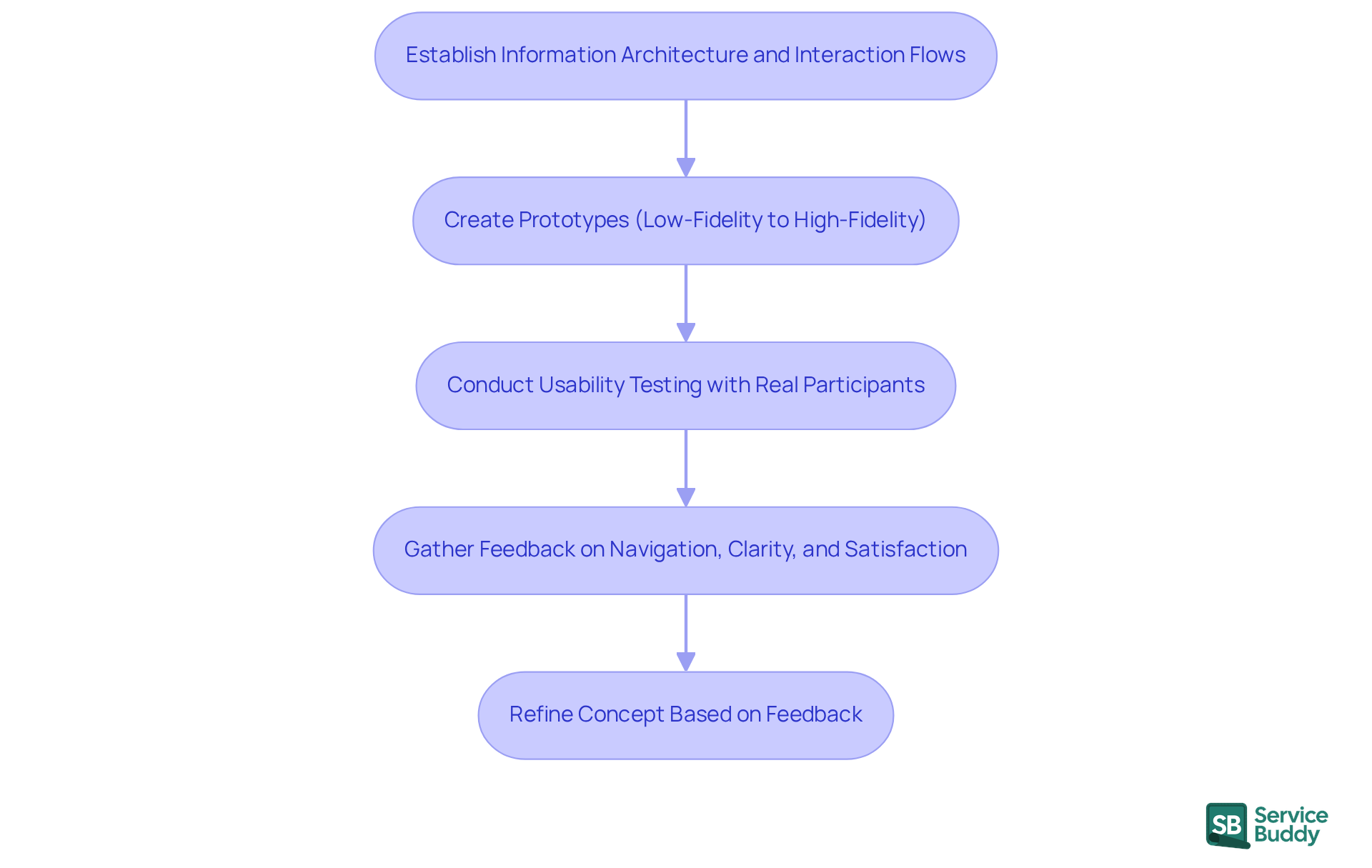
Once you've established your information architecture and interaction flows, the next crucial step is to create prototypes of your design. These prototypes can range from low-fidelity wireframes to high-fidelity interactive models, tailored to the specific phase of your project. Tools like Figma or Adobe XD can significantly streamline this process.
After your prototypes are in place, conducting usability testing with real participants from your target audience becomes essential. This testing should focus on key aspects such as ease of navigation, clarity of information, and overall user satisfaction. For instance, if users struggle to find the quoting feature, this feedback is invaluable for guiding necessary modifications.
Gradually refining your concept based on these testing results is vital for enhancing usability and ensuring that the final product effectively meets customer needs. In fact, businesses that prioritize usability testing often see remarkable improvements in engagement and satisfaction. Research indicates that 84% of firms enhancing customer experience experience a rise in revenue. Moreover, effective UX design can lead to conversion rate increases of up to 400%, underscoring the financial benefits of a user-centered approach.
By integrating usability testing into your workflow ux design services best practices, you not only enhance the experience for users but also position your flooring software for greater success in a competitive market. With UX designers projected to be in high demand by 2025, adopting these practices is more critical than ever to stay ahead in the industry.
Finalize Visual Design and Handoff to Development
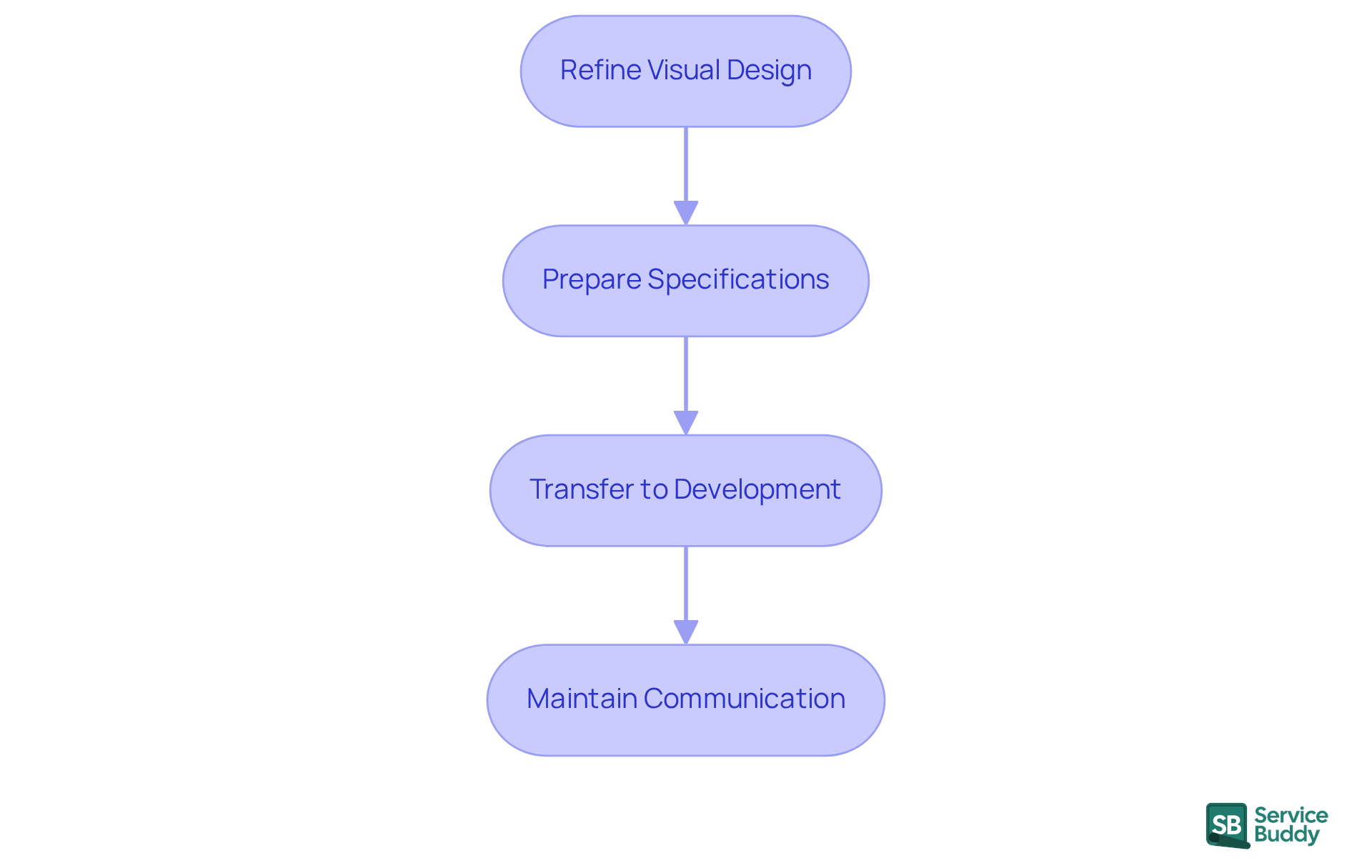
In the final phase of your workflow UX design services best practices, it’s crucial to refine the visual appearance of your platform. This step ensures alignment with your brand identity and enhances user experience. Did you know that 85% of shoppers cite color as a primary reason for purchasing a product? Moreover, 93% of consumers say visual appearance is the key deciding factor in their purchase decisions. With these statistics in mind, effective use of color, typography, and imagery becomes essential.
Once the visual layout is complete, prepare for a seamless transfer to the development team. Create detailed specifications that follow workflow UX design services best practices, including style guides, component libraries, and interaction guidelines. Tools like Zeplin or Figma can streamline this process, ensuring developers have all the essential information to execute your concept precisely. Minimizing errors through a strong handoff is crucial, as it aligns with workflow UX design services best practices and reduces the time teams spend fixing issues later.
Maintaining open channels of communication with the development team during the implementation stage is vital to adhere to workflow UX design services best practices. This teamwork reduces misunderstandings and allows for prompt adjustments, ultimately ensuring that the final product aligns with your initial vision by implementing workflow UX design services best practices. A well-executed transfer of specifications can significantly reduce errors and enhance the overall quality of the final product, making it a critical step in the software development process for flooring services.
Additionally, consider this: 94% of first impressions of websites are related to design. This statistic highlights the profound impact of design on user engagement and trust. By prioritizing these elements, you not only enhance your platform’s appeal but also foster a stronger connection with your audience.
Conclusion
By adhering to the best practices for workflow UX design in the flooring industry, businesses can craft tailored solutions that effectively tackle the unique challenges encountered by carpet retailers, rug cleaners, and service teams. A profound understanding of user needs, paired with a structured approach to problem definition, information architecture, and prototyping, sets the stage for successful design outcomes. Ultimately, prioritizing user experience not only boosts customer satisfaction but also propels revenue growth and operational efficiency.
Throughout this article, we've highlighted key strategies, such as:
- The significance of thorough user and market research
- Defining clear problems and goals
- Developing intuitive information architectures
- Conducting rigorous usability testing
Each of these steps plays a vital role in a cohesive UX design process that aligns with the flooring sector's needs, ensuring the final product is both functional and engaging. The integration of visual design principles and effective handoff processes further elevates the overall quality and success of the project.
As the flooring industry evolves, embracing these UX design best practices is crucial for maintaining a competitive edge. By concentrating on user-centered design and leveraging insights from research, flooring companies can enhance their service offerings and cultivate lasting relationships with clients. The call to action is clear: invest in exceptional UX design that not only meets but exceeds user expectations, paving the way for innovation and growth in the flooring market.
Frequently Asked Questions
What is the first step in creating a successful workflow UX design for surface services?
The first step is to conduct comprehensive user and market research to understand the target audience, which includes carpet retailers, rug cleaners, and service teams.
How can user and market research be conducted effectively?
Effective research can be conducted through methods such as surveys, interviews, and focus groups to gather both qualitative and quantitative data about users' pain points and preferences.
Why is it important to examine competitors during the research phase?
Examining competitors provides valuable insights into market trends and consumer expectations, helping to identify what they do well and where they fall short, which informs the development process.
What should be done after identifying user pain points?
After identifying user pain points, it is crucial to craft clear problem statements that pinpoint specific issues, such as inefficiencies in quoting and job management.
Can you give an example of a well-defined problem statement?
A well-defined problem statement could be: "Flooring retailers struggle to generate accurate quotes quickly, leading to missed sales opportunities."
What is the significance of setting SMART goals in UX development?
Setting SMART (Specific, Measurable, Achievable, Relevant, Time-bound) goals is essential to define success for the project, guiding creative choices and providing a framework for assessing the impact of solutions.
What is a potential SMART goal for improving quote generation time?
A potential SMART goal could be to aim for a 30% reduction in quote generation time within three months of implementation.
What common pitfalls should be avoided when setting SMART goals?
Common pitfalls include making goals too vague or unrealistic, which can hinder the effectiveness of the project.
List of Sources
- Conduct User and Market Research
- How 2025 is Reshaping the Flooring Industry (https://floortrendsmag.com/articles/113307-how-2025-is-reshaping-the-flooring-industry)
- Survey 2025: What the Retailers Think: While over half of retailers are reporting growth, their responses to the survey indicate nervousness about success down the road - July 2025 (https://floordaily.net/floorfocus/survey-2025-what-the-retailers-think-while-over-half-of-retailers-are-reporting-growth-the)
- Flooring Market Size, Share, Demand, Report, 2025-2032 (https://fortunebusinessinsights.com/flooring-market-102740)
- TOP 20 FLOORING MARKETING STATISTICS 2025 | Amra And Elma LLC (https://amraandelma.com/flooring-marketing-statistics)
- Commercial Flooring Strategies Driving the Market in 2025 (https://cleanlink.com/cleanlinkminute/details/Commercial-Flooring-Strategies-Driving-the-Market-in-2025--66114)
- Define Problems and Set Clear Goals
- 5 Flooring Software Trends for 2025 | Service Buddy (https://servicebuddy.io/blog/5-flooring-software-trends-that-will-define-2025-and-how-to-profit-from-them)
- Understanding the future of the flooring industry (https://cyncly.com/resources/blog/understanding-the-future-of-the-flooring-industry)
- What’s next for the flooring industry: A strategic vision for 2025 (https://cyncly.com/pt-PT/resources/blog/strategic-vision-for-flooring-industry-2025)
- Survey 2025: What the Retailers Think: While over half of retailers are reporting growth, their responses to the survey indicate nervousness about success down the road - July 2025 (https://floordaily.net/floorfocus/survey-2025-what-the-retailers-think-while-over-half-of-retailers-are-reporting-growth-the)
- Flooring dealers reported mixed results in 2025 - Floor Covering News (https://fcnews.net/2025/11/flooring-dealers-reported-mixed-results-in-2025)
- Develop Information Architecture and User Flow
-
Top 2025 AI Construction Trends: According to the Experts - Digital Builder (https://autodesk.com/blogs/construction/top-2025-ai-construction-trends-according-to-the-experts)
-
Best Practices
Case Studies (https://ors.od.nih.gov/OD/OQM/benchmarking/bestpractice/Pages/case_studies.aspx) -
:: Praxinet : the performance management experts (https://praxinet.com/case_studies.html)
-
Case Studies (https://msdynamicsworld.com/case_studies)
-
15 Inspirational UX Design Quotes | CareerFoundry (https://careerfoundry.com/en/blog/ux-design/15-inspirational-ux-design-quotes-that-every-designer-should-read)
- Implement Prototyping and Usability Testing
- 30+ Essential UX Stats for 2025 Strategy | Maze (https://maze.co/blog/ux-statistics)
- 40+ Product Design Statistics: UX Metrics, ROI Benchmarks & Data for 2026 (https://designrush.com/agency/product-design/trends/product-design-statistics)
- 20 User Research and UX Quotes to Inspire You | User testing and UX research platform (https://sharewell.eu/20-user-research-and-ux-quotes-to-inspire-you)
- 15 Inspiring UX Quotes for Innovation and Design (https://interaction-design.org/literature/article/ux-quotes?srsltid=AfmBOooXZVwUzlXI2Gd1e9uUD8j43PbCSGN014JJ2E6iDnFWfYOaruxi)
- 8 Key UX Research Trends Shaping 2025 (and What to Watch in 2026) – Loop11 (https://loop11.com/8-key-ux-research-trends-shaping-2025-and-what-to-watch-in-2026)
- Finalize Visual Design and Handoff to Development
- Designer-Developer Handoff – A Guide to Successful Design Handoff (https://calibraint.com/blog/designer-developer-handoff)
- BEST VISUAL BRANDING PSYCHOLOGY STATISTICS 2025 (https://amraandelma.com/visual-branding-psychology-statistics)
- What Are Design Handoffs — updated 2025 (https://interaction-design.org/literature/topics/design-handoffs?srsltid=AfmBOopwcjrcJgjvEn8xnxe-KnjBbMbCuWlXlxUbpRdJ7mD6isg7kXJp)
- Why is the Design Handoff broken today ? (https://dev.to/dualite/why-is-the-design-handoff-broken-today--3ig6)
- 50+ UX Statistics To Convince Stakeholders 2025 (https://uxcam.com/blog/ux-statistics)
Related Blog Posts

.svg)


See Service Buddy in action with a live demo
Everything you need to run your flooring business, Service Buddy is your all-in-one management platform.