
4 Best Practices in Enterprise Product Design to Improve Time to Value
Explore key strategies in enterprise product design digital product design to improve time to value and user satisfaction.


Introduction
In today’s competitive landscape, delivering products that truly resonate with users while maximizing efficiency is crucial for enterprises. The principles of enterprise product design streamline development processes and enhance customer satisfaction, ultimately improving time to value. However, as organizations strive to implement these practices, they often face significant challenges that can impede their progress.
How can businesses effectively navigate these obstacles to ensure their product designs meet both user needs and market demands? This question is not just a matter of strategy; it’s a call to action for flooring business owners seeking solutions to operational challenges.
Understand the Principles of Enterprise Product Design
Enterprise product design is anchored in several fundamental principles that drive the creation of effective and user-friendly products:
-
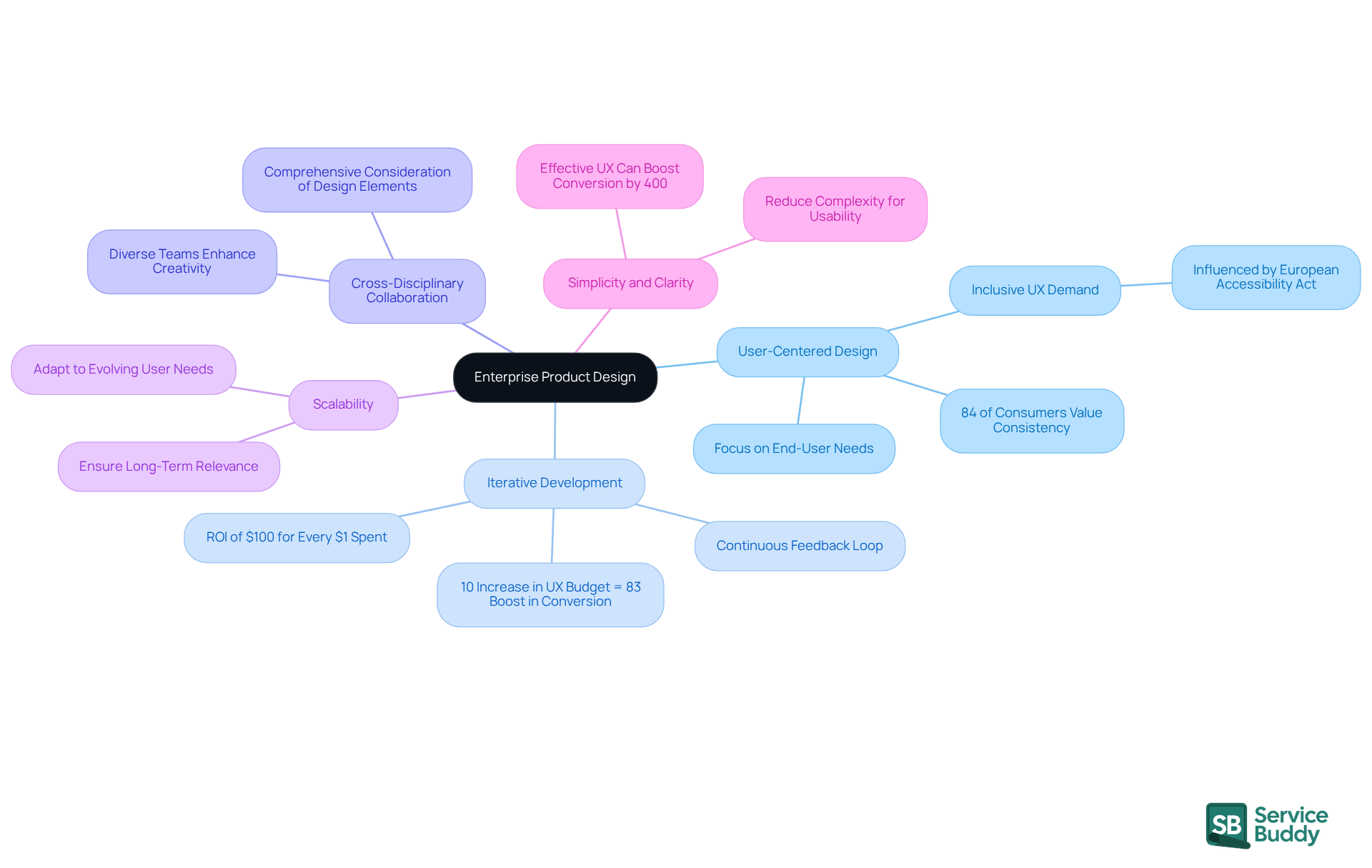
User-Centered Design: Focusing on the requirements and experiences of end-users is essential for creating intuitive solutions that address real-world demands. This method not only promotes involvement but also greatly improves customer satisfaction. In fact, research shows that 84% of consumers believe consistency in appearance strengthens a brand's trustworthiness. Moreover, the increasing demand for inclusive UX creation, shaped by regulations such as the European Accessibility Act, highlights the importance of addressing various consumer needs in development.
-
Iterative Development: Continuous feedback and enhancement are vital in refining items based on user input. This iterative process leads to better outcomes. Did you know that increasing the UX budget by just 10% can boost conversion rates by up to 83%? Firms that adopt this methodology frequently observe significant returns on their investments, with every dollar allocated to UX generating around $100 in returns. This emphasizes the financial influence of user-centered approaches.
-
Cross-Disciplinary Collaboration: Engaging diverse teams from different fields boosts creativity and guarantees thorough consideration of all elements, from functionality to aesthetics. This cooperative method is essential for tackling the intricacies of contemporary design, especially in sectors such as flooring where consumer preferences can differ significantly.
-
Scalability: Creating offerings that can expand and adjust to evolving user requirements and market conditions is crucial for sustained success. As enterprise tools become more intricate, scalability ensures that offerings remain pertinent and efficient over time.
-
Simplicity and Clarity: Reducing complexity in layout is key to enhancing usability. A clear and straightforward interface enables individuals to browse items more easily, which is essential for improving overall experience. Research indicates that effective UX can boost conversion rates by up to 400%, highlighting the significance of simplicity in aesthetics.
By following these principles, organizations can utilize enterprise product design digital product design to improve time to value, developing offerings that not only achieve business goals but also provide substantial value to consumers. This ultimately fosters growth and satisfaction in a competitive market.
Identify Key Benefits of Enterprise Product Design
The advantages of efficient enterprise product design digital product design to improve time to value are numerous and can significantly influence an organization's success. Here are some key benefits:
-
Improved Customer Experience: A well-crafted product enhances user satisfaction, leading to higher retention rates and loyalty. Did you know that 60% of consumers become repeat purchasers after a personalized buying experience? Moreover, customer satisfaction increases by 33% when companies prioritize customer experience. This highlights the significance of user-focused development in the context of enterprise product design digital product design to improve time to value.
-
Enhanced Productivity: Streamlined workflows and intuitive interfaces reduce the time spent on tasks, allowing individuals to focus on core activities. Businesses that emphasize aesthetics often see a 32% rise in cross-selling and up-selling due to improved customer experiences. Firms with top aesthetic ratings achieve revenue growth 32% faster, illustrating how impactful aesthetics can drive operational efficiency.
-
Cost Savings: Investing in quality aesthetics can lower support costs by creating more intuitive products that require less user training and assistance. Organizations that enhance customer experience report an 84% increase in revenue, while companies that improve customer experience see a 42% boost in retention. This highlights the financial advantages of effective planning.
-
Faster Time to Market: Implementing enterprise product design and digital product design to improve time to value accelerates development timelines, enabling organizations to respond swiftly to market demands. Companies that utilize A/B testing to refine their creations often achieve conversion rates that are 37% higher than those that do not. This illustrates how enterprise product design digital product design to improve time to value is crucial for speeding up market readiness.
-
Competitive Advantage: Companies that prioritize aesthetics stand out in crowded markets, attracting more customers and driving revenue growth. Research shows that creativity-driven companies outperform the S&P 500 by 211% over a decade, showcasing the long-term benefits of a strong focus on aesthetics.
By recognizing these advantages, organizations can better align their creation strategies with business objectives, ultimately leading to enhanced performance.

Implement Effective Strategies for Enterprise Product Design
To effectively implement enterprise product design strategies, organizations must adopt several key approaches:
-
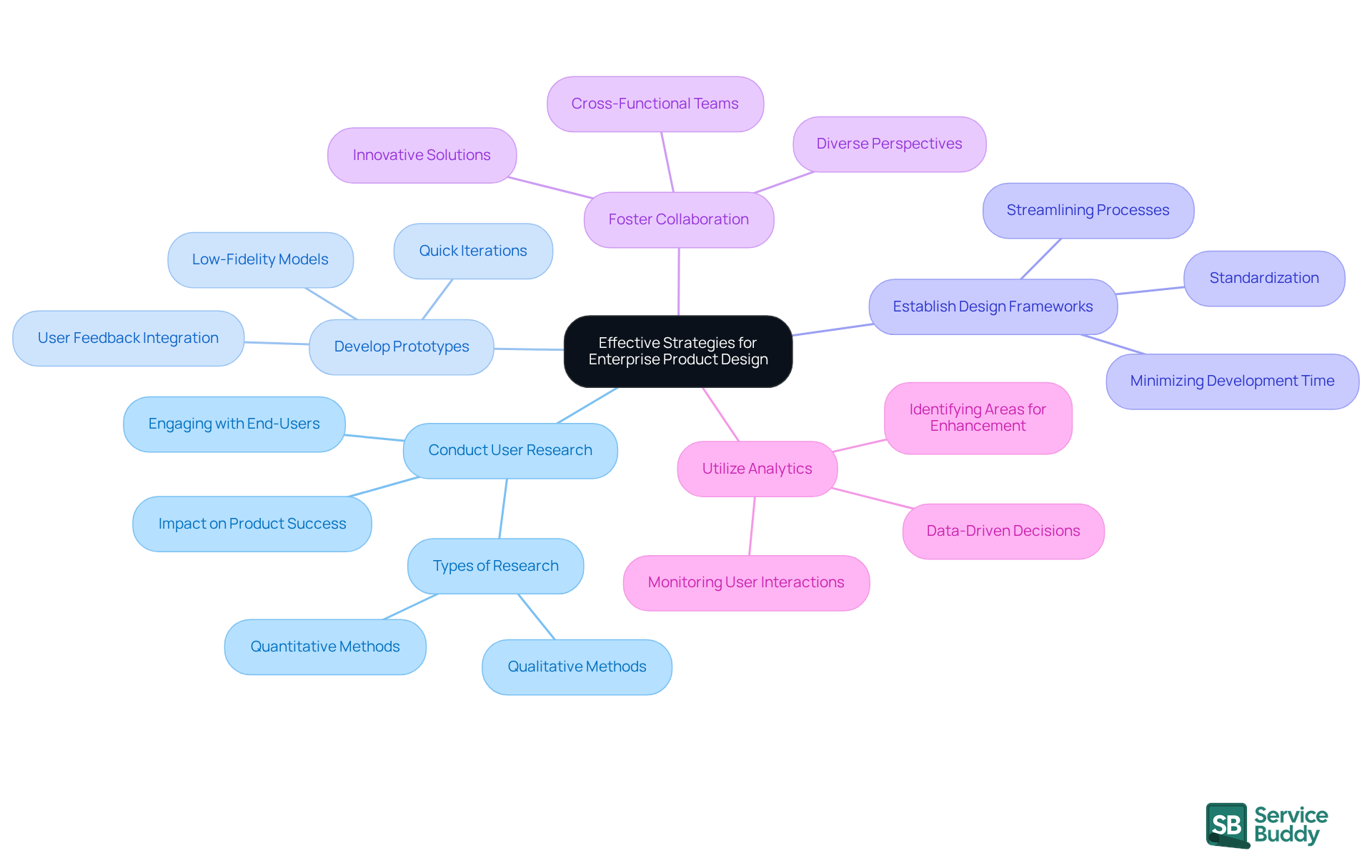
Conduct User Research: Engaging with end-users is crucial. By gathering insights about their needs and pain points, organizations can make informed development decisions that resonate with users.
-
Develop Prototypes: Creating low-fidelity models allows teams to test concepts early in the process. This approach facilitates quick iterations based on user feedback, ensuring that the final product aligns with user expectations.
-
Establish Design Frameworks: A standardized framework is essential. It ensures uniformity across products and minimizes development time, streamlining the entire process.
-
Foster Collaboration: Encouraging cross-functional teams to work together throughout the creation process integrates diverse perspectives and expertise, leading to more innovative solutions.
-
Utilize Analytics: Leveraging data analytics is vital for monitoring user interactions. By identifying areas for enhancement, organizations can make data-driven decisions that improve overall user experience.
By implementing these strategies in enterprise product design digital product design to improve time to value, organizations can refine their development processes and create offerings that deliver greater value to users. Are you ready to elevate your product design approach?
Overcome Challenges in Implementing Enterprise Product Design
Implementing enterprise product development can present several challenges that flooring business owners must navigate. Here are common obstacles and effective strategies to overcome them:
-
Resistance to Change: Employees may be hesitant to adopt new development processes. Combat this by providing comprehensive training and clearly demonstrating the benefits of the new systems. How can you ensure your team feels supported during this transition?
-
Resource Constraints: Limited budgets and personnel can hinder creative efforts. Prioritize projects based on their potential impact and consider phased implementations to manage resources effectively. Are you making the most of your available resources?
-
Complex Stakeholder Needs: Balancing the diverse needs of stakeholders can be challenging. Establish clear communication channels and involve stakeholders early in the development process to align expectations. How can you foster collaboration among all parties involved?
-
Integration with Legacy Systems: Current systems may complicate new implementation strategies. Conduct thorough assessments to identify integration points and develop a phased approach to transition. Have you evaluated how your existing systems can support new initiatives?
-
Maintaining Participant Focus: As projects expand, it can be easy to overlook the needs of those using the service. Frequently reassess user research and feedback to ensure that your approach remains user-centered. Are you keeping the end-user in mind throughout the development process?
By proactively addressing these challenges, organizations can significantly enhance their ability to implement effective enterprise product design digital product design to improve time to value strategies. Take action now to ensure your business thrives in a competitive landscape.

Conclusion
Embracing effective enterprise product design is crucial for organizations looking to enhance their time to value. By prioritizing user-centered design, iterative development, cross-disciplinary collaboration, scalability, and simplicity, businesses can craft products that not only meet market demands but also cultivate customer satisfaction and loyalty. These principles lay the groundwork for developing offerings that resonate with users while achieving strategic objectives.
The benefits of adopting best practices in enterprise product design are significant. Improved customer experience translates to higher retention rates, while enhanced productivity streamlines workflows. Intuitive designs lead to cost savings, and faster time to market provides a competitive edge. By integrating user research, developing prototypes, establishing design frameworks, fostering collaboration, and utilizing analytics, organizations can refine their processes and create value-driven products.
Ultimately, enterprise product design is about more than just aesthetics; it plays a pivotal role in shaping business outcomes. Organizations must proactively tackle challenges like resistance to change and resource constraints, ensuring they stay focused on end-user needs. By committing to these practices, companies can not only thrive in competitive landscapes but also drive innovation and growth in the long term. Embrace these strategies today to unlock the full potential of enterprise product design and elevate your business success.
Frequently Asked Questions
What is enterprise product design?
Enterprise product design is the process of creating effective and user-friendly products by focusing on user needs, iterative development, collaboration, scalability, and simplicity.
What is user-centered design?
User-centered design focuses on the requirements and experiences of end-users, promoting involvement and enhancing customer satisfaction by addressing real-world demands.
Why is consistency in design important?
Consistency in design strengthens a brand's trustworthiness, with 84% of consumers believing it enhances brand reliability.
What role does iterative development play in product design?
Iterative development involves continuous feedback and enhancement based on user input, leading to improved outcomes and significant returns on investment in user experience (UX).
How can increasing the UX budget impact conversion rates?
Increasing the UX budget by just 10% can boost conversion rates by up to 83%, demonstrating the financial benefits of investing in user-centered design.
What is the importance of cross-disciplinary collaboration?
Cross-disciplinary collaboration brings together diverse teams, enhancing creativity and ensuring comprehensive consideration of all design elements, which is vital for addressing the complexities of modern design.
What does scalability mean in the context of product design?
Scalability refers to creating products that can expand and adapt to changing user needs and market conditions, ensuring their relevance and efficiency over time.
Why is simplicity and clarity important in product design?
Simplicity and clarity reduce complexity, enhancing usability and enabling users to navigate products more easily. Effective UX can boost conversion rates by up to 400%.
How do these principles benefit organizations?
By following these principles, organizations can improve time to value and develop products that achieve business goals while providing substantial value to consumers, fostering growth and satisfaction in a competitive market.
List of Sources
- Understand the Principles of Enterprise Product Design
- Product Design Trends and Stats for 2024 (https://monsoonfish.com/product-design-trends-statistics)
- Enterprise UX Design Trends 2025 | Systems Structures Signals (https://aufaitux.com/blog/enterprise-ux-design-trends)
- 120 Design Statistics: Design Principles, Technological Trends, and Sustainable Design (https://linearity.io/blog/design-statistics)
- 40+ Product Design Statistics: UX Metrics, ROI Benchmarks & Data for 2026 (https://designrush.com/agency/product-design/trends/product-design-statistics)
- 14 UX Statistics to Prove that Design Matters (https://eleken.co/blog-posts/14-impressive-ux-statistics-to-prove-the-value-of-great-design)
- Identify Key Benefits of Enterprise Product Design
- 150+ UX (User Experience) Statistics and Trends (Updated for 2025) (https://userguiding.com/blog/ux-statistics-trends)
- 40+ Product Design Statistics: UX Metrics, ROI Benchmarks & Data for 2026 (https://designrush.com/agency/product-design/trends/product-design-statistics)
- 50+ UX Statistics To Convince Stakeholders 2025 (https://uxcam.com/blog/ux-statistics)
- 30+ Essential UX Stats for 2025 Strategy | Maze (https://maze.co/blog/ux-statistics)
- Enterprise UX Design for SaaS Success in 2025 (https://stldigital.tech/blog/why-user-experience-matters-more-than-ever-in-enterprise-applications)
- Implement Effective Strategies for Enterprise Product Design
- 40+ UX Statistics (from 200,000 hours of UX Research) – Baymard (https://baymard.com/learn/ux-statistics)
- 50+ UX Statistics To Convince Stakeholders 2025 (https://uxcam.com/blog/ux-statistics)
- Enterprise UX Design Trends 2025 | Systems Structures Signals (https://aufaitux.com/blog/enterprise-ux-design-trends)
- How to do user research: techniques, examples, and tips for product teams (https://cleverx.com/blog/understanding-user-research-methods-examples-and-how-to-use-it-in-product-developement)
- 30+ Essential UX Stats for 2025 Strategy | Maze (https://maze.co/blog/ux-statistics)
- Overcome Challenges in Implementing Enterprise Product Design
- Top 10+ resist change quotes (https://torbenrick.eu/blog/change-management/resist-change-quotes)
- 25 Quotes about Managing Change - ConantLeadership (https://conantleadership.com/25-quotes-about-managing-change)
- Top 20 Quotes About Embracing Change (https://aseonline.org/News/Articles/top-20-quotes-about-embracing-change)
- Launching Under Pressure: How Resource Scarcity Affects Design Decisions and Resource Management (https://asmedigitalcollection.asme.org/mechanicaldesign/article/148/6/061401/1228292/Launching-Under-Pressure-How-Resource-Scarcity)
- A Q&A with Rosie Evans Krimme reveals that the success of transformation is determined by people, not processes (https://manufacturing-today.com/news/a-qa-with-rosie-evans-krimme-reveals-that-the-success-of-transformation-is-determined-by-people-not-processes)
Related Blog Posts

.svg)
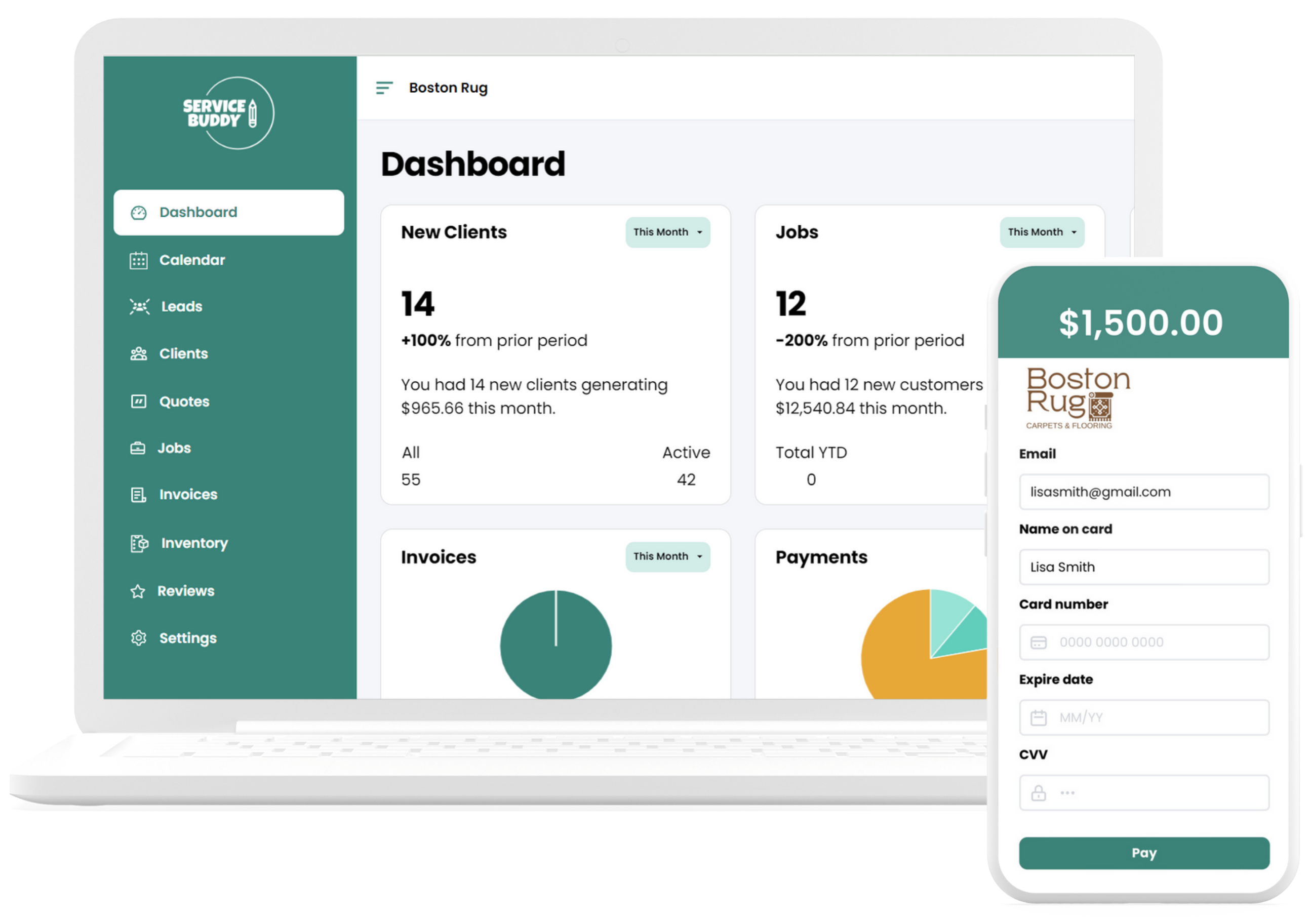
See Service Buddy in action with a live demo
Everything you need to run your flooring business, Service Buddy is your all-in-one management platform.