
4 Best Practices for Your Enterprise Product Design Consultant Proposal
Master best practices for crafting an effective enterprise product design consultant proposal.


Introduction
Crafting a compelling enterprise product design consultant proposal goes beyond a mere grasp of design principles; it requires a sophisticated approach to client engagement and communication. Have you ever considered how deeply understanding your clients' unique needs and expectations can transform your proposals? By integrating user research and customizing proposals for various stakeholders, consultants can create impactful documents that truly resonate. Yet, what happens when conventional practices fall short, leaving clients feeling unheard or misunderstood? This article delves into four best practices that not only enhance proposal effectiveness but also build stronger partnerships, ensuring that both consultants and clients achieve their desired outcomes.
Understand Client Needs and Expectations
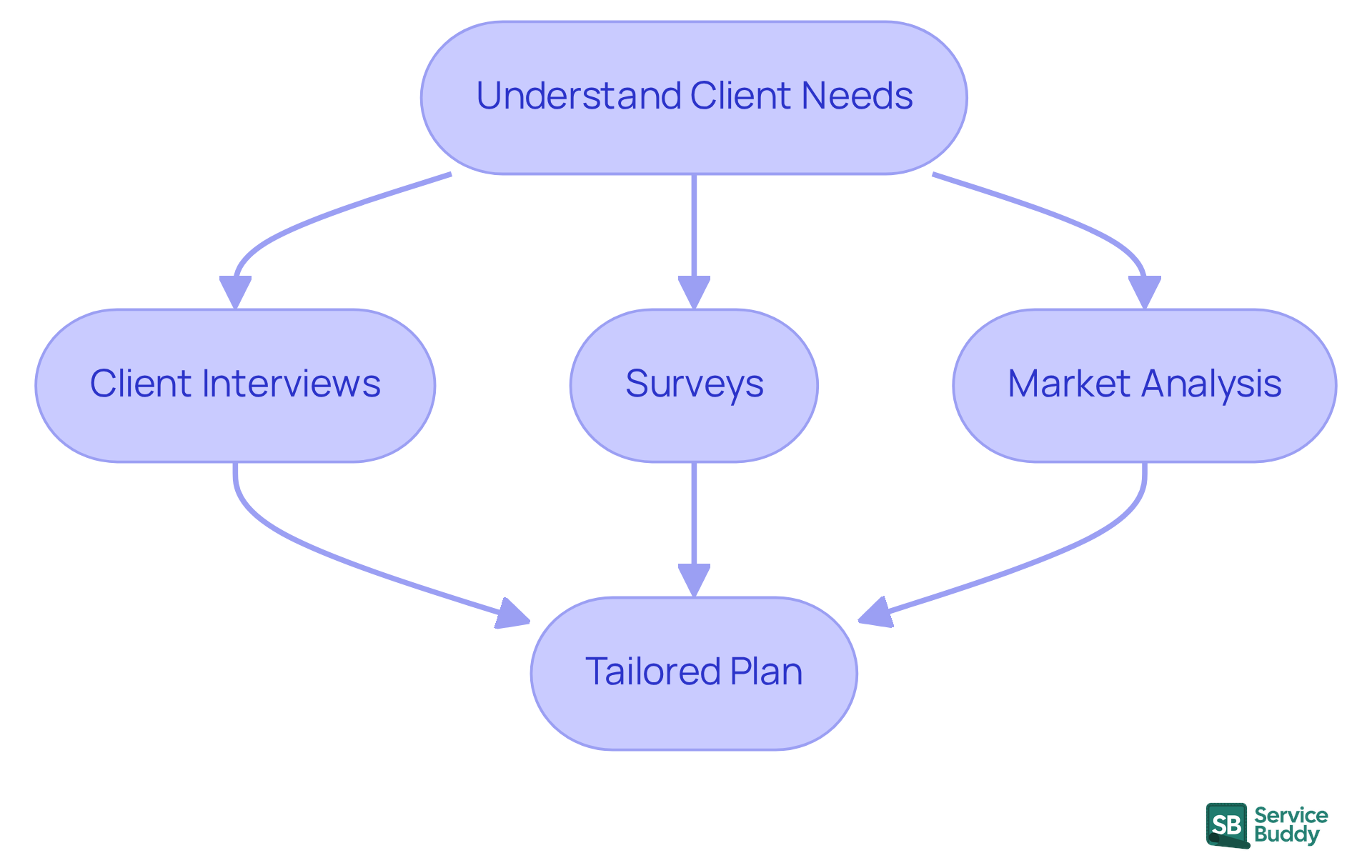
To create an engaging plan, start with thorough research to understand your customer's business, challenges, and objectives. How well do you know your clients? Methods like client interviews, surveys, and market analysis are essential for gathering valuable insights. This foundational knowledge allows you to tailor your plan to meet specific needs, showing that you’re not just providing a generic solution but a targeted approach that aligns with their goals.
For instance, consider a flooring seller struggling with inventory management. Highlight how your recommendations can streamline their operations and boost efficiency. This personalized strategy not only fosters trust but also positions you as a partner genuinely invested in their success. By demonstrating your understanding of their unique challenges, you pave the way for a collaborative relationship that drives results.
Incorporate User Research and Testing
Integrating client research and testing into your development process is essential for ensuring that your solutions meet actual needs. Start by conducting interviews and usability tests to gather qualitative insights about the experiences and preferences of your target audience. This valuable information can guide your design decisions and help articulate how your solution addresses customer pain points.
For example, if testing reveals that customers find the quoting process cumbersome, emphasize how your solution simplifies this task. By incorporating client feedback into your enterprise product design consultant proposal, you not only strengthen your argument but also show potential customers that you prioritize their end-consumers. This approach can lead to higher adoption rates and increased satisfaction.
Consider this: design-focused firms experience 32% faster revenue growth compared to standard companies. This statistic underscores the strategic advantage of prioritizing client experience in the competitive flooring sector. Furthermore, 58% of respondents reported a boost in customer satisfaction after conducting user research, showcasing the tangible benefits of integrating user feedback.
It's crucial to remember that 70% of online businesses fail due to inadequate usability. This makes usability testing a vital component of your development efforts. By focusing on these aspects, you position your business for success in a challenging market.

Structure and Present Your Proposal Effectively
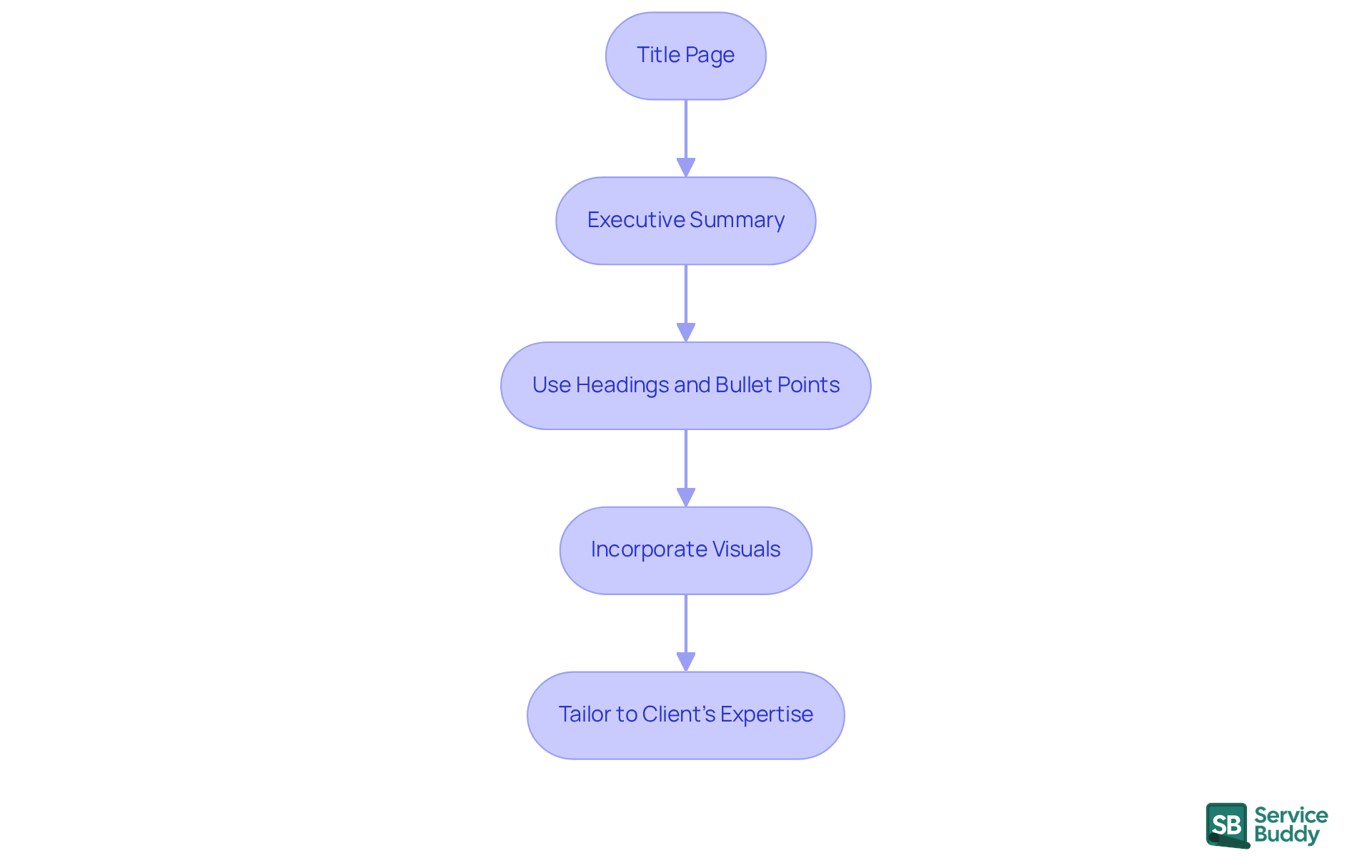
A well-organized plan is crucial for effective communication in the flooring industry. Start with a clear title page, followed by an executive summary that outlines the main points. This sets the stage for what’s to come and captures attention right away.
To maintain interest, use headings and bullet points to break up text, making the document scannable. Incorporate visuals, such as charts or diagrams, to illustrate complex ideas and enhance understanding. For example, if your suggestion includes a new job management system, consider including a flowchart that shows how it integrates with existing processes. This not only clarifies your proposal but can also be very persuasive.
Finally, ensure that your submission is free of jargon and tailored to the client's level of expertise. This approach makes your communication accessible and engaging, ultimately prompting action. By following these guidelines, you can effectively convey your message and support flooring business owners in overcoming their operational challenges.
Tailor Proposals for Different Stakeholders
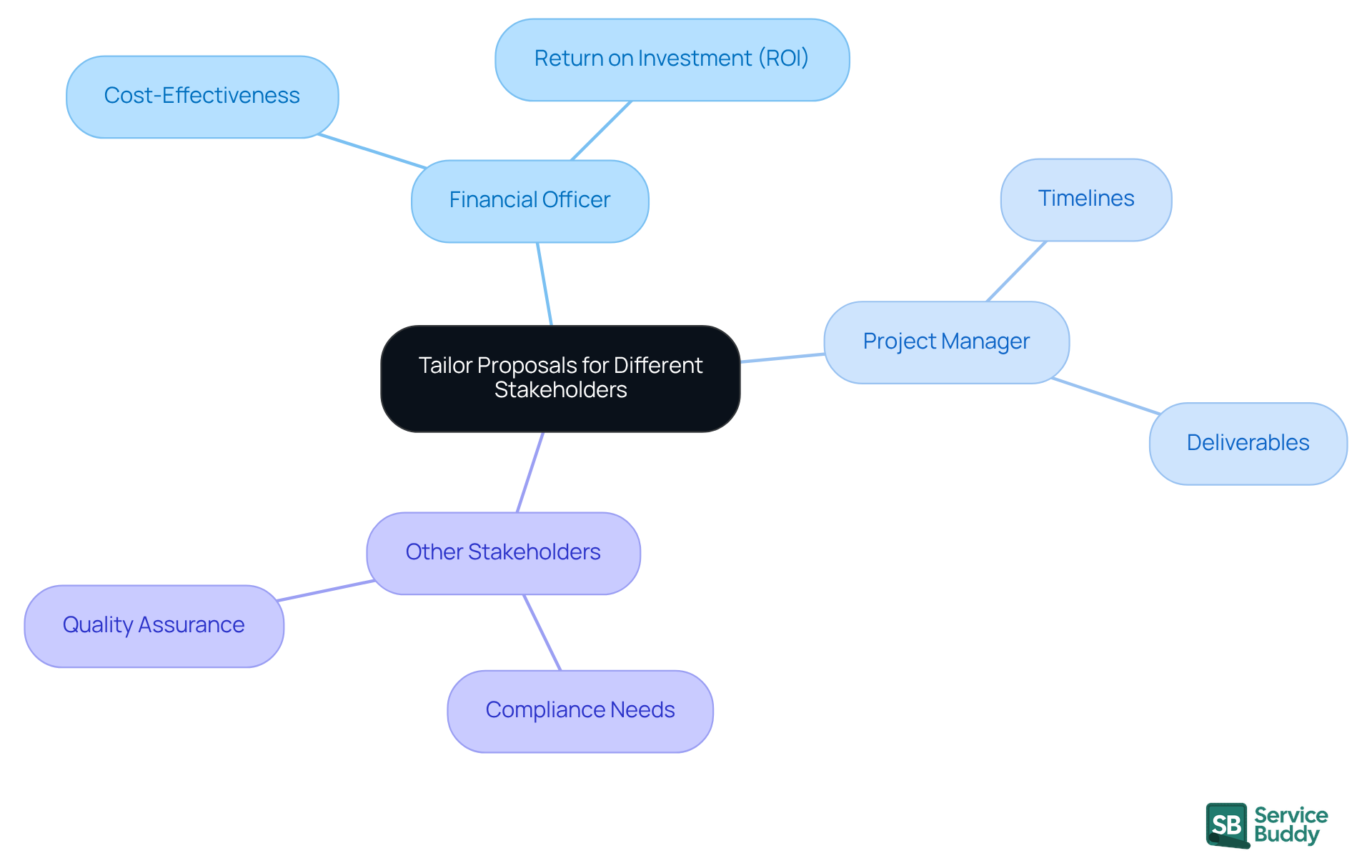
Recognizing that stakeholders have varied priorities is crucial for developing effective plans. A thorough stakeholder analysis helps identify key decision-makers and their unique interests. For example, a financial officer may prioritize cost-effectiveness, while a project manager focuses on timelines and deliverables. By customizing your enterprise product design consultant proposal to address these specific needs, you can significantly enhance its impact.
Incorporate relevant data and case studies that resonate with each stakeholder's concerns. When presenting to a financial officer, for instance, include a cost-benefit analysis that clearly illustrates the return on investment (ROI) of your proposed solution. This targeted approach not only improves the effectiveness of the enterprise product design consultant proposal but also strengthens relationships with stakeholders, ultimately resulting in higher project success rates.
Research shows that companies with effective stakeholder engagement are 40% more likely to complete projects on time and within budget. This statistic underscores the importance of a strategic approach in the flooring industry. Are you ready to elevate your stakeholder engagement strategy and drive your projects to success?
Conclusion
Creating a compelling enterprise product design consultant proposal is essential for success in today’s competitive landscape. It hinges on understanding client needs, integrating user research, and effectively communicating tailored solutions. By prioritizing a client-centric approach, proposals transform from generic documents into powerful tools that resonate with stakeholders and drive project success.
Key strategies include:
- Thorough client research to grasp unique challenges and objectives
- Incorporating user feedback through testing
- Structuring proposals for clarity and engagement
These elements not only enhance the proposal's effectiveness but also foster trust and collaboration with clients. Recognizing the diverse priorities of stakeholders ensures that proposals address specific interests, leading to better decision-making and project outcomes.
Ultimately, adopting these best practices is vital for any enterprise aiming to stand out. By focusing on personalized strategies and effective communication, businesses can meet and exceed client expectations, paving the way for successful partnerships. Embracing this approach not only increases the likelihood of project success but also positions consultants as trusted allies in their clients' journeys toward realizing their goals.
Frequently Asked Questions
Why is it important to understand client needs and expectations?
Understanding client needs and expectations is crucial for creating an engaging plan that is tailored to their specific business challenges and objectives, rather than providing a generic solution.
What methods can be used to gather insights about clients?
Methods such as client interviews, surveys, and market analysis are essential for gathering valuable insights about clients' businesses and their unique challenges.
How does understanding a client's business help in creating a plan?
By thoroughly understanding a client's business, you can tailor your plan to meet their specific needs, demonstrating that you are genuinely invested in their success and fostering a collaborative relationship.
Can you provide an example of how tailored recommendations can benefit a client?
For instance, a flooring seller struggling with inventory management can benefit from recommendations that streamline their operations and boost efficiency, showcasing a personalized strategy that addresses their unique challenges.
What is the outcome of demonstrating an understanding of a client's challenges?
Demonstrating an understanding of a client's unique challenges helps to build trust and positions you as a partner, ultimately driving results and fostering a collaborative relationship.
List of Sources
- Understand Client Needs and Expectations
- 60 RFP Statistics: The Secrets To Winning More Bids (https://openasset.com/resources/rfp-statistics)
- Flooring Market Size, Share, Demand, Report, 2025-2032 (https://fortunebusinessinsights.com/flooring-market-102740)
- Flooring Market | Global Market Analysis Report - 2035 (https://futuremarketinsights.com/reports/flooring-market)
- Unlock the Secrets to Explosive Growth in Your Flooring Business (https://floorzap.com/blog/how-to-grow-your-flooring-business)
- 46 RFP Statistics on Win Rates & Proposal Management (https://loopio.com/blog/rfp-statistics-win-rates)
- Incorporate User Research and Testing
- 40+ Product Design Statistics: UX Metrics, ROI Benchmarks & Data for 2025 (https://designrush.com/agency/product-design/trends/product-design-statistics)
- 40+ UX Statistics: How to Prove UX ROI With Hard Data (https://userpilot.com/blog/ux-statistics)
- The Impact Of Usability Testing On User Retention | AWA Digital (https://awa-digital.com/blog/the-impact-of-usability-testing-on-user-retention)
- 150+ UX (User Experience) Statistics and Trends (Updated for 2025) (https://userguiding.com/blog/ux-statistics-trends)
- Structure and Present Your Proposal Effectively
- 60 RFP Statistics: The Secrets To Winning More Bids (https://openasset.com/resources/rfp-statistics)
- Inbound Marketing Website Redesign (https://simplemarketingnow.com/case_studies/website-redesign)
- 11 Writing Quotes to Make Your Proposals Better (https://utleystrategies.com/blog/proposal-writing-quotes)
- Tailor Proposals for Different Stakeholders
- The Future of Proposal Management (https://deltek.com/en/blog/the-future-of-proposal-management)
- 🚀 A Simple Guide to Prepare a Successful Tailored Proposal (https://linkedin.com/pulse/simple-guide-prepare-successful-tailored-proposal-nurul-haszeli)
- Stakeholder Engagement Effectiveness Statistics (https://zoetalentsolutions.com/stakeholder-engagement-effectiveness)
- How To Write Proposals For Different Industries - fundsforNGOs - Grants and Resources for Sustainability (https://fundsforngos.org/how-to-write-a-proposal/how-to-write-proposals-for-different-industries)
Related Blog Posts

.svg)
See Service Buddy in action with a live demo
Everything you need to run your flooring business, Service Buddy is your all-in-one management platform.